
African honeysuckle
Halleria lucida
Description
Growing requirements
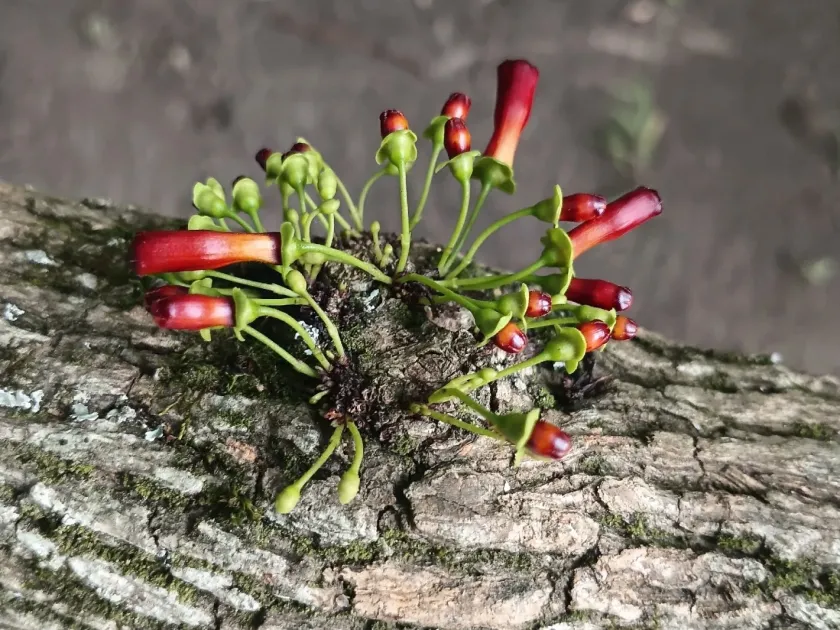
Halleria lucida, commonly known as the African honeysuckle, belongs to the Scrophulariaceae family. This species is an evergreen shrub or small tree that is highly valued for its striking, tubular orange-red flowers that emerge directly from the woody stems.
Native to Southern Africa, this plant thrives in a variety of habitats, ranging from moist forests to mountain slopes. Its natural adaptability makes it a popular choice for gardens in warmer climates, while in cooler regions, it is cultivated primarily in greenhouses.
Successful cultivation requires a location with bright, indirect sunlight. While the plant can tolerate some shade, adequate light is essential for dense foliage development and the initiation of flowering, which typically occurs during the cooler months.
The soil requirements involve a well-draining, nutrient-rich medium with a slightly acidic to neutral pH. Regular fertilization with balanced organic plant food during the growing season supports the vigorous growth and ornamental appeal of the shrub.
Water management is crucial; the substrate should be kept consistently moist but never waterlogged. During winter, the irrigation frequency should be significantly reduced as the plant enters a period of metabolic dormancy, especially in container-grown specimens.
Main diseases and pests
Halleria lucida is generally resilient, but it can be susceptible to common greenhouse pests such as scale insects, aphids, and spider mites. These pests tend to flourish in conditions of low humidity and stagnant air circulation.
Fungal diseases like root rot are often caused by poor drainage and excessive moisture. To mitigate this risk, it is essential to ensure that potting containers have adequate drainage holes and that the soil mix is well-aerated.
Powdery mildew may appear on the foliage if the plant is kept in humid, poorly ventilated spaces. Increasing air circulation and maintaining proper spacing between plants can significantly reduce the likelihood of such infections.
Biological pest control is recommended, including the use of neem oil or insecticidal soaps, which are effective against most sap-sucking insects without damaging the plant's delicate tissues. Preventive monitoring is the best strategy for healthy cultivation.
Pruning is not only an aesthetic necessity but also a disease prevention strategy. By thinning out the inner branches, you improve air circulation through the canopy, which effectively discourages the growth of opportunistic fungi and pests.