
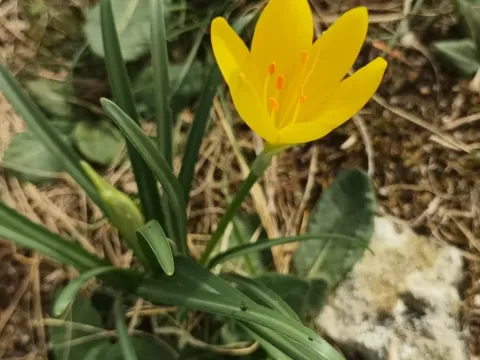
Sternbergia sicula
Sternbergia sicula
Planting Sternbergia sicula is best performed in late summer or early autumn when the plant is in its dormancy period. Providing enough time for roots to establish before the onset of winter is crucial for success.
What the section contains
Sternbergia sicula
Bulbs should be planted at a depth of 10 to 15 centimeters. Adjusting the planting depth based on soil type is essential; deeper planting is preferred in lighter, sandy soils to protect the bulb from frost and moisture fluctuations.
Maintain a spacing of 10 to 15 centimeters between bulbs to ensure adequate airflow and nutrient uptake. Crowded plantings often suffer from reduced floral display and increased risk of disease due to poor ventilation.
Propagation is primarily achieved by dividing offsets from the main bulb after the foliage has died back. These offsets should be replanted immediately to prevent dehydration, which can significantly weaken the young plants.
Proper site preparation involves ensuring the soil is loose and friable. Adding organic matter or sand helps improve structure, allowing the bulbs to expand without the physical constraint of compacted earth.
Sternbergia sicula is a member of the Amaryllidaceae family, native to the Mediterranean basin. Its natural habitat is characterized by dry, hot summers and mild, wet winters, which dictates its specific growth cycle.
The plant requires full sun exposure to flourish. While it may tolerate partial shade, insufficient light levels will result in weak stems and a significant decline in flower production during the autumn season.
The ideal growing medium is a well-drained, neutral to slightly alkaline soil. Excellent drainage is non-negotiable, as stagnant moisture is the primary cause of bulb rot in cultivated environments.
While the species is relatively hardy, it benefits from protection in colder climates. Applying a thick layer of mulch or protective fabric during winter helps maintain a stable soil temperature around the root zone.
Water management is the most important aspect of its maintenance. Regular irrigation is necessary only during the active growth phases; during the summer dormancy, the soil must be kept completely dry to prevent rot.
Fungal diseases, particularly grey mould and fusarium rot, represent the most significant threat to the health of Sternbergia sicula. These pathogens proliferate in damp, poorly ventilated soil conditions.
Prevention relies on chemical treatment of the bulbs with fungicides prior to planting and ensuring that the planting site has adequate slope or drainage layers to prevent the accumulation of water.
Pests such as the Narcissus fly larvae can cause severe damage by feeding on the bulb tissue. Regular monitoring and the application of granular soil insecticides can help mitigate the risk of infestation.
Rodents such as mice and voles find the bulbs highly attractive, particularly during the winter months. Using wire baskets or protective netting during planting is a recommended strategy to deter these pests.
Slugs and snails may attack the young, succulent foliage as it emerges in the autumn. Using copper barriers or organic deterrents around the base of the plant effectively protects the foliage from being consumed.