
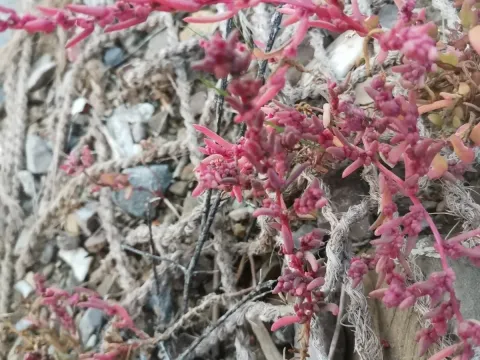
Suaeda albescens
Suaeda albescens
Suaeda albescens is a specialized halophytic plant belonging to the Amaranthaceae family. It is remarkably adapted to survive in highly saline environments, such as salt marshes and deserts, where traditional crop species cannot thrive due to osmotic stress.
What the section contains
Suaeda albescens
The plant exhibits distinctive succulent foliage, which is an evolutionary adaptation for water storage in arid climates. Its appearance is characterized by a whitish or glaucous coloration, contributing to its scientific name and its ability to reflect excessive solar radiation.
Regarding soil requirements, Suaeda albescens thrives in soils with high concentrations of chlorides and sulfates. It prefers open, sunny locations where high light intensity supports its physiological processes and salt-sequestration mechanisms.
Cultivation practices focus on maintaining the appropriate moisture level in saline substrates. While the plant is drought-resistant, adequate soil moisture during the active growing phase significantly improves its vegetative growth and biomass production.
The root system of the plant is highly developed, allowing for efficient nutrient uptake even in poor-quality soils. This makes it a robust candidate for ecological restoration projects in degraded agricultural lands affected by secondary salinization.
The primary agricultural use of Suaeda albescens is as a forage crop for camels and small ruminants in arid regions. Its high mineral content and ability to grow where other plants perish make it a vital component of the local feed supply chain.
Yield productivity is closely tied to environmental factors, particularly the timing of precipitation. Under optimal conditions in managed plots, the plant can produce significant biomass that supports sustainable grazing practices.
Beyond its value as fodder, Suaeda albescens is increasingly recognized for its potential in phytoremediation. It can actively extract salts from the topsoil, helping to reclaim land for future agricultural use or environmental stabilization.
Research into the seeds of this species suggests potential for industrial extraction of oils or biomass-based chemicals. While currently localized, these applications could increase the economic viability of growing Suaeda in saline-stricken areas.
Sustainable harvesting of the plant involves rotational grazing or controlled cutting to ensure the persistence of the stand. This ensures that the ecological benefits of soil stabilization are maintained while supporting livestock productivity.