
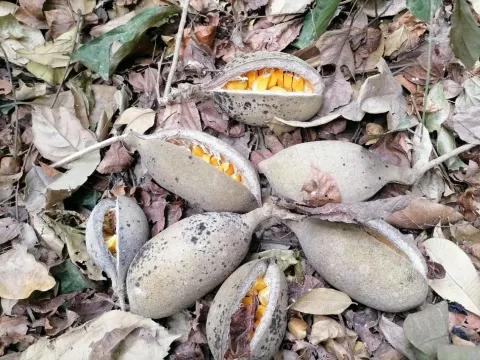
Sterculia oblonga
Sterculia oblonga
Sterculia oblonga is a prominent member of the Malvaceae family, native to the tropical forests of West and Central Africa. This species is known for its tall, straight-growing habit, which makes it a highly valuable resource in tropical forestry sectors.
What the section contains
Sterculia oblonga
The tree thrives in environments characterized by consistently high rainfall and warm tropical temperatures throughout the year. It requires deep, fertile, and well-drained soils to reach its full potential, avoiding sites where waterlogging might occur.
Climate conditions are critical, as the species does not possess mechanisms to handle cold stress or prolonged drought. A stable environment is essential for maintaining the continuous physiological processes required for wood density accumulation.
Light availability is another key factor during the seedling stage. Although it is a forest-dwelling species, establishing young trees requires a balance between adequate light and necessary protection from the harshest direct sun.
Silvicultural practices focus on ensuring tree health through appropriate spacing and enrichment planting. By mimicking natural ecological conditions, forest managers can improve the overall survival rate and growth velocity of the species.
The primary yield derived from Sterculia oblonga is its high-quality timber. The wood is esteemed for its uniform grain and workability, making it suitable for furniture manufacturing, interior joinery, and decorative veneers.
Industrial applications include the production of plywood and structural elements. Its physical properties allow it to compete effectively with other tropical hardwoods, providing a sustainable alternative when managed under certified forestry schemes.
Secondary uses of the plant include traditional medicinal applications. Local populations have long utilized bark and leaf extracts, though these uses remain specialized and typically outside of the major commercial timber-oriented scope.
Long-term yield estimates are based on the periodic measurement of standing volume. Because the tree is a slow-growing hardwood, management cycles are designed to be long-term, ensuring the replacement of harvested individuals.
Sustainable harvesting is essential to maintain the economic value of Sterculia oblonga populations. By adopting low-impact logging techniques, the industry aims to ensure that the ecological balance of the native forests is preserved.
The health of Sterculia oblonga stands is frequently challenged by fungal root rot, especially in zones with poor drainage. Once established, these infections can spread quickly through root contact, necessitating strict sanitation protocols.
Wood-boring insects, or xylophagous pests, pose a severe threat to timber quality. These insects penetrate the trunk, creating galleries that compromise the structural integrity and marketability of the harvested logs.
Deforestation and habitat loss represent the most significant environmental threats to the species. The fragmentation of its natural range increases vulnerability to environmental stressors and disrupts the natural regeneration cycle of the tree.
Weed competition during the juvenile phase can suppress growth significantly. Ensuring that young trees are not overwhelmed by fast-growing vines or shrubbery is a standard procedure in forest management programs.
Integrated pest management remains the most effective strategy for mitigating losses. By monitoring for early signs of insect activity or leaf pathology, foresters can take prompt action to prevent small infestations from becoming regional outbreaks.