
Tetraena gaetula
Tetraena gaetula
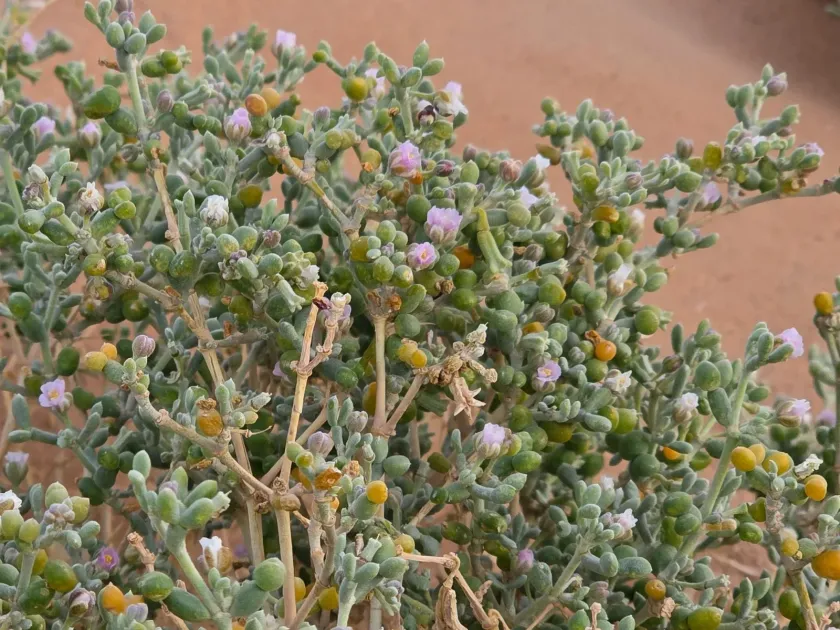
Description
Growing requirements
Tetraena gaetula is a perennial subshrub belonging to the Zygophyllaceae family. It is evolutionary specialized to survive in the most extreme desert environments, demonstrating high resilience to aridity.
The native distribution area of this species encompasses the vast arid and semi-arid landscapes of North Africa. It thrives primarily in sandy plains and saline soils, where it functions as a crucial stabilizer for shifting desert sands.
The climatic requirements are characterized by high solar radiation and extreme heat tolerance. The plant does not require high water inputs; in fact, it performs best in soils with excellent drainage, as excessive moisture leads to root zone instability.
Botanically, it displays succulent features that assist in water retention within its stems and leaves. This morphological adaptation allows the plant to remain metabolically active even when water availability is negligible for other vegetation.
Agronomic management of this species is largely limited to natural range management. Planting or seeding efforts should focus on low-impact ecological restoration, ensuring that the soil structure mimics its natural sandy or alkaline habitat.
Harvesting
The primary economic use is as a reliable forage source for nomadic livestock, particularly dromedary camels. Its ability to provide fodder during the peak of the dry season makes it an essential biological asset for desert-dwelling communities.
Harvesting for fodder is typically conducted via controlled grazing practices rather than mechanical means. By managing grazing pressure, pastoralists ensure the longevity of the plant population, which in turn protects the surrounding desert soil from degradation.