
Tetraena alba
Tetraena alba
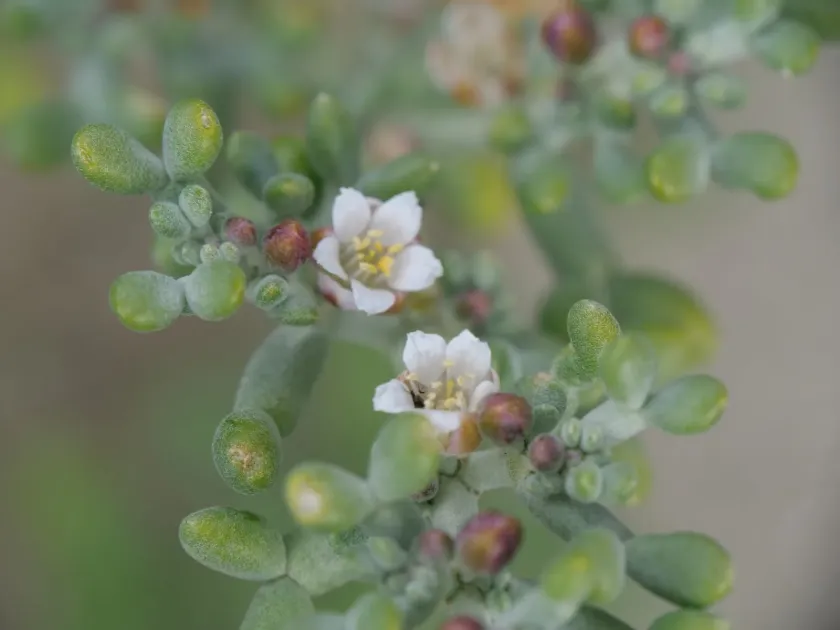
Description
Growing requirements
Tetraena alba is a perennial succulent subshrub belonging to the Zygophyllaceae family. It is a highly specialized halophyte, naturally evolved to thrive in environments characterized by high salinity and low precipitation levels.
The native habitat of this species covers the arid regions of North Africa and the Middle East. It plays a crucial role in desert ecosystems by stabilizing sandy soils and providing a source of biological diversity in harsh climates.
Botanically, Tetraena alba is recognized by its fleshy, moisture-storing leaves and deep taproot system, which allows it to tap into groundwater reservoirs unavailable to most plants. Its anatomy is perfectly adapted to minimize water loss under extreme solar exposure.
Regarding soil requirements, the plant excels in saline soils, including solonchaks, where salt concentrations would inhibit the growth of traditional crops. It requires well-drained substrate to prevent fungal infections and root suffocation during sporadic rain events.
Agrotechnically, the focus is on maintaining soil health and preventing waterlogging. While it is extremely drought-tolerant, supplemental water during the establishment phase can significantly improve biomass production in reclaimed desert areas.
Main diseases and pests
The primary threats to Tetraena alba health are soil-borne pathogens and fungi that thrive if the plant is subjected to poor soil drainage or excessive moisture for prolonged periods.
Insect pests, specifically various locust species, are known to consume the foliage of the plant, which can result in significant loss of green matter during peak infestation years.
Root rot is the most common physiological disorder caused by improper irrigation practices. Maintaining dry surface conditions is essential for the longevity of the plant in cultivation.
Weed competition during the early growth stages is a limiting factor. Effective management practices include hand-weeding or mechanical cultivation between rows to ensure that young seedlings have sufficient space and nutrients.
Excessive salinity buildup above the plant's tolerance threshold, while rare, can sometimes inhibit nutrient uptake, leading to chlorosis and stunted growth of the main stem.