
Tetraena dumosa
Tetraena dumosa
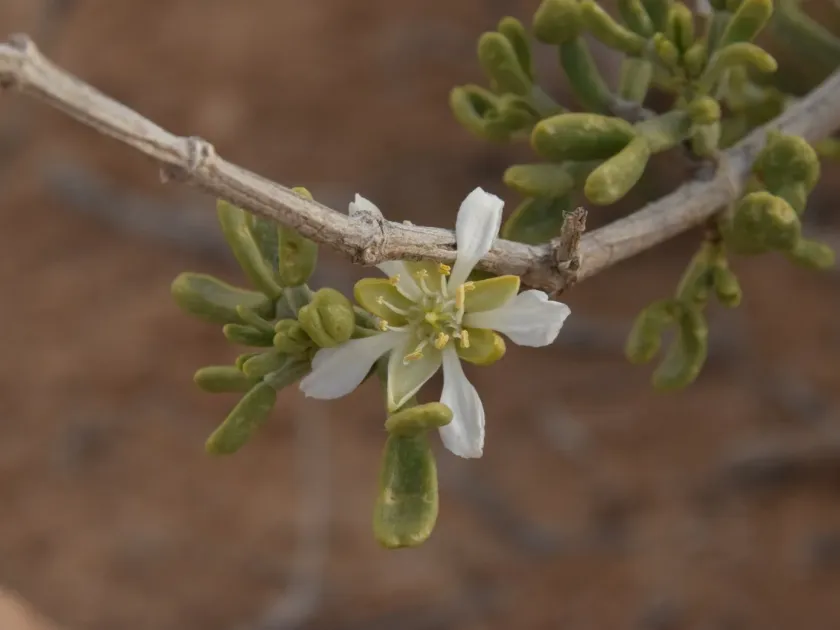
Description
Growing requirements
Tetraena dumosa is a perennial evergreen shrub belonging to the Zygophyllaceae family. It is a highly specialized plant species, naturally evolved to thrive in the harsh, arid environments of the Middle East and surrounding desert landscapes.
The plant originates from desert regions with extremely low annual precipitation. It acts as a foundational species in these ecosystems, providing necessary structure to soil and preventing the degradation of habitats caused by wind and water erosion.
Botanically, it is defined by a deep-reaching root system designed to access subsurface moisture. Its leaves are structurally adapted to minimize transpiration, while the plant itself possesses physiological mechanisms to survive in high-salinity soil conditions.
Growth requirements emphasize the necessity for high solar radiation and well-drained substrate, such as sandy or rocky terrain. Tetraena dumosa displays remarkable resilience to high thermal stress and is sensitive to poor drainage, which can lead to root system failure.
Agronomic management in rehabilitation projects involves controlled seeding techniques. Proper establishment requires initial irrigation during the early growth stages, though once mature, the plant survives exclusively on sporadic rainfall and deep soil moisture reserves.
Harvesting
The primary economic use of this species is environmental engineering, specifically for desert reclamation and landscape stabilization. While not a primary crop for intensive agriculture, it serves as a critical biological resource for maintaining soil integrity and providing limited grazing opportunities in arid environments.