
Leucosyke capitella
Leucosyke capitella
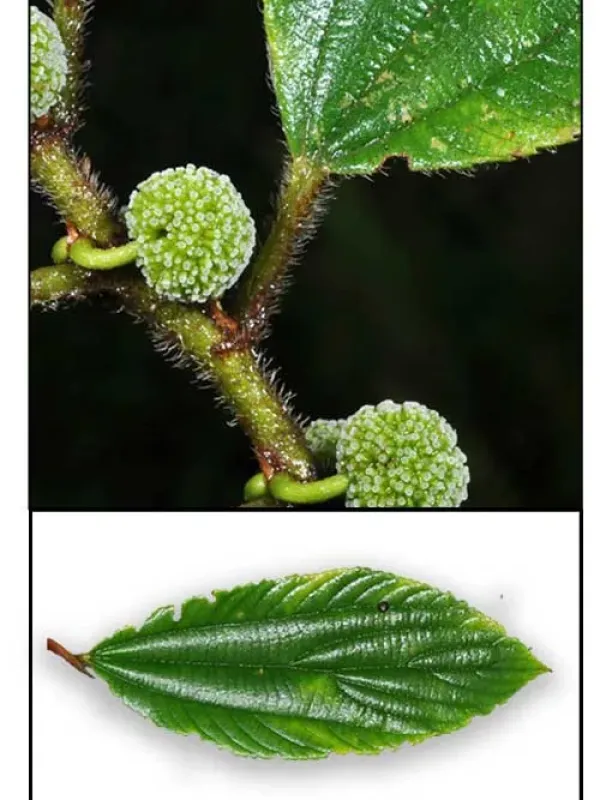
Description
Growing requirements
Leucosyke capitella is a species of flowering plant belonging to the Urticaceae family. It is predominantly found in tropical regions of Asia, such as the Philippines, where it flourishes in moist habitats, including forest fringes and cleared landscapes.
The plant thrives in well-drained soils rich in organic matter. It prefers warm, humid conditions that mirror the tropical climate, where constant temperature and high rainfall ensure consistent vegetative growth throughout the year.
Botanically, it appears as a shrub or small tree characterized by alternate leaves with pubescent undersides. The flowers are arranged in dense, head-like inflorescences, from which the name of the species originates, facilitating effective wind pollination.
Regarding its environmental requirements, the plant shows remarkable tolerance for disturbed sites. It is often among the first colonizers in areas where the primary forest canopy has been removed, highlighting its potential for ecological restoration projects.
Maintenance of the plant in a managed setting involves ensuring sufficient soil moisture while preventing waterlogging. Given its natural adaptation, it requires little to no chemical intervention to thrive in its native range.
Harvesting
The primary economic application of Leucosyke capitella is the extraction of high-quality bast fiber from the inner bark of young shoots. This fiber is historically prized for its tensile strength and resistance to decay, making it suitable for cordage.
Harvesting involves the careful selection and pruning of pliable, young branches. This traditional practice allows for the sustainable extraction of raw materials without endangering the survival or continued health of the parent shrub.
Once harvested, the branches are usually soaked in water to loosen the tissues, followed by scraping or stripping to isolate the fibers. This process is essential to ensure that the resulting threads are clean and of uniform quality for braiding.
The plant is also recognized for its secondary uses in traditional medicine, where extracts from the leaves have been noted for their anti-inflammatory potential. These properties make it a subject of interest for local ethnobotanical studies.
Future agricultural prospects for this crop lie in the development of more efficient processing techniques. By refining the fiber extraction methods, farmers can improve the productivity and marketability of this historically significant tropical resource.