
Nolana paradoxa
Nolana paradoxa Lindl. subsp. atriplicifolia (D. Don) Mesa
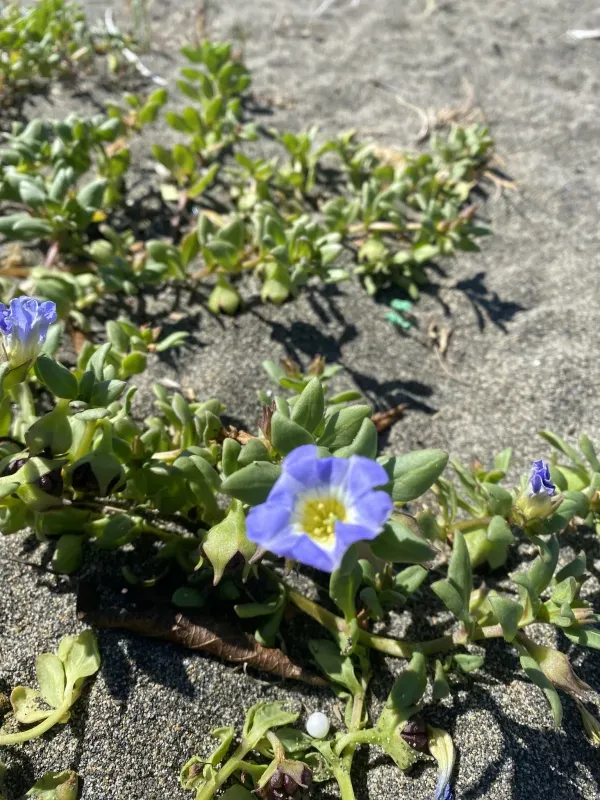
Description
Sowing dates
Nolana paradoxa is a tender annual that requires warm soil to germinate, so seeds should be sown outdoors only when all danger of frost has passed in late spring.
For earlier flowering, growers often choose to start seeds indoors in flats about six to eight weeks before the last expected frost date in their specific region.
The seeds are small and should be sown shallowly, barely covering them with vermiculite or fine soil to allow sufficient light to reach them during the germination process.
Maintain consistent moisture and a warm ambient temperature of approximately 21 degrees Celsius to ensure uniform germination across the seed tray.
Once seedlings have developed their first set of true leaves, they should be hardened off gradually before being transplanted into their permanent outdoor locations.
Growing requirements
As a member of the Solanaceae family native to the arid coastal regions of Chile, this plant is exceptionally well-adapted to hot, sunny, and dry environments.
The species requires full sun exposure to maintain its compact, sprawling growth habit and to promote the development of its characteristic blue or violet funnel-shaped flowers.
Well-drained, sandy, or gritty soil is essential for the health of Nolana paradoxa, as it is highly susceptible to root rot when grown in heavy or waterlogged substrates.
It displays remarkable drought tolerance once established, meaning it requires minimal irrigation compared to many other decorative bedding plants.
Fertilization should be kept to a minimum, as high nitrogen levels can cause excessive vegetative growth, which often results in fewer flowers and weaker stems.
Main diseases and pests
Root rot is the most significant threat to this crop, typically caused by overwatering or poor drainage systems that keep the soil saturated for extended periods.
Powdery mildew can occur in humid or poorly ventilated environments, resulting in a white fungal film on the leaves that stunts the overall growth of the plant.
Slugs and snails are notorious for feeding on young, succulent leaves and can decimate a fresh planting within a few nights if not properly managed.
Spider mites may occasionally infest the plants during periods of prolonged drought or extreme heat, sucking the cell sap and causing the leaves to turn yellow or speckled.
- Ensure soil is loose and fast-draining.
- Avoid overhead watering to keep foliage dry.
- Monitor for mollusks during damp weather.
- Space plants adequately for airflow.