
Wedge-leaved saxifrage
Saxifraga cuneifolia
Description
Growing requirements
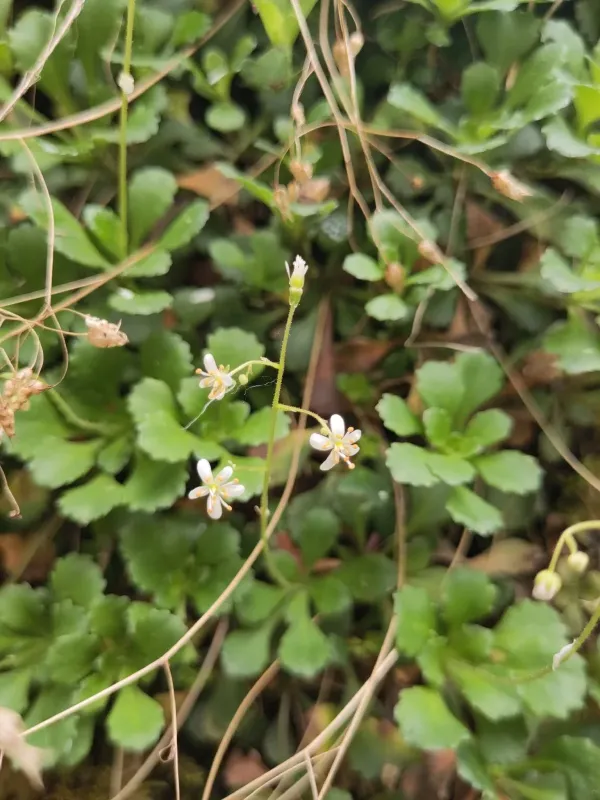
Wedge-leaved saxifrage (Saxifraga cuneifolia) is a herbaceous perennial belonging to the Saxifragaceae family. This species originates from the mountain ranges of Central and Southern Europe, where it naturally colonizes rocky crevices and damp slopes.
The plant requires semi-shaded locations with well-drained, nutrient-rich soil. Direct sunlight should be avoided during the peak of summer, as the plant prefers cooler environments and consistent moisture levels without waterlogging.
Botanically, this species is characterized by compact, evergreen rosettes of wedge-shaped, leathery leaves. During the late spring and early summer, it produces delicate panicles of small white or slightly pink-spotted flowers on thin stems.
Agrotechnical practices involve maintaining soil moisture and ensuring proper drainage to prevent root rot. It is an excellent choice for rock gardens, shaded border fronts, or as a decorative ground cover that suppresses weed growth in temperate climates.
Propagation is primarily achieved through division of the rosettes in early spring or autumn. Providing a layer of grit around the base of the plant helps protect the foliage from direct contact with wet soil, improving overall plant health.
Main diseases and pests
Fungal diseases, particularly crown rot and leaf spots, are the primary threats when humidity levels are too high. Improving air circulation around the plants and avoiding overhead irrigation can significantly reduce the risk of infection.
Slugs and snails are major pests that feed on the soft tissue of the leaves. Gardeners should implement barrier methods or use iron phosphate pellets to protect the rosettes from these common gastropods during wet seasons.
Aphid infestations can occur on young flower stalks, sucking plant juices and weakening the specimen. If necessary, horticultural soap or targeted insecticides can be applied to manage the population of these insects effectively.
Poor soil drainage leads to chlorosis and stunted growth, often mimicking nutrient deficiencies. Regular application of a balanced, low-concentration fertilizer is generally sufficient to support the plant's nutritional requirements during the active growth season.
Regular maintenance, including the removal of dead or decaying lower leaves, is essential to minimize the risk of pest colonization and fungal outbreaks. Keeping the planting area clean of organic debris helps maintain optimal conditions for the saxifrage.