
Foamflower
Tiarella polyphylla D. Don
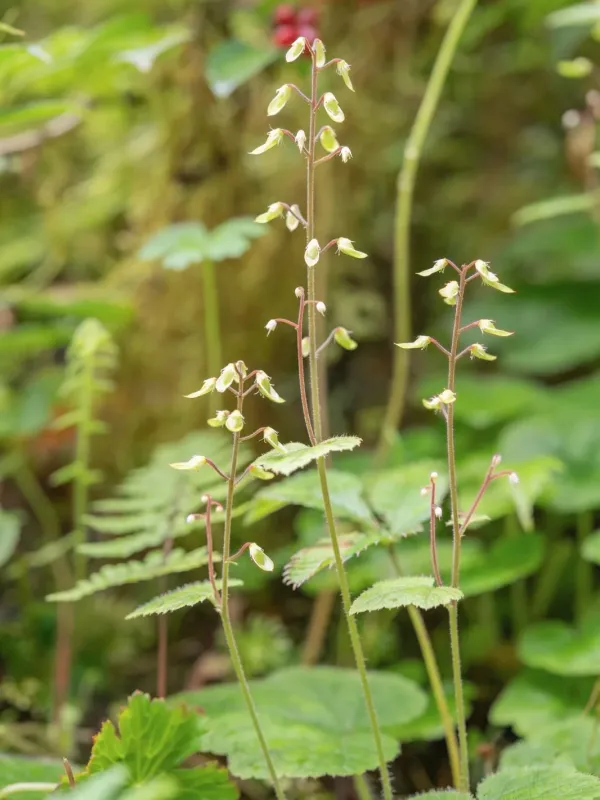
Description
Growing requirements
Tiarella polyphylla, commonly known as foamflower, belongs to the Saxifragaceae family. This hardy perennial is native to the woodland regions of East Asia, where it thrives in moist, shaded environments under dense canopy cover.
The plant performs best in partially shaded to fully shaded areas. Exposure to intense midday sun is detrimental to its foliage, often causing scorching and bleaching of the leaf color, which reduces its overall ornamental value.
Optimal soil conditions include rich, humus-dense, and well-drained loamy soil. The plant requires consistent moisture but cannot tolerate waterlogged conditions, which may lead to the rapid decline of its shallow root system.
Regarding climate, Tiarella polyphylla is highly adaptable to cooler temperate zones. It thrives in regions where summer temperatures remain moderate, and it generally requires a layer of organic mulch during winter to protect the crown from frost heaving.
Cultivation requires regular irrigation, especially during the establishment phase and during periods of low rainfall. Adding organic matter to the soil annually helps maintain the structure and fertility necessary for vigorous growth.
Main diseases and pests
The primary threats to this plant are fungal pathogens, specifically root and crown rots caused by excessive humidity and poorly drained soil. Improving drainage through the addition of grit or sand is essential in heavy soil types.
Slugs and snails are persistent pests that can cause significant damage to the lush, foliage-heavy clumps of the plant. Monitoring and the use of physical barriers or organic baits are recommended to control these populations.
Powdery mildew is occasionally observed during humid, stagnant weather conditions. Proper plant spacing is the most effective cultural method to ensure adequate airflow and prevent the development of these infections.
Nutrient deficiency or incorrect pH levels can manifest as yellowing leaves (chlorosis). Regular soil testing ensures that the plant receives adequate micronutrients to maintain its characteristic vibrant leaf patterns.
Good sanitation practices, such as removing dead foliage in late autumn, are vital to reduce the overwintering spores of fungi. Keeping the planting area clean prevents common diseases from spreading in the spring.