
Tiarella wherryi
Tiarella wherryi Lakela
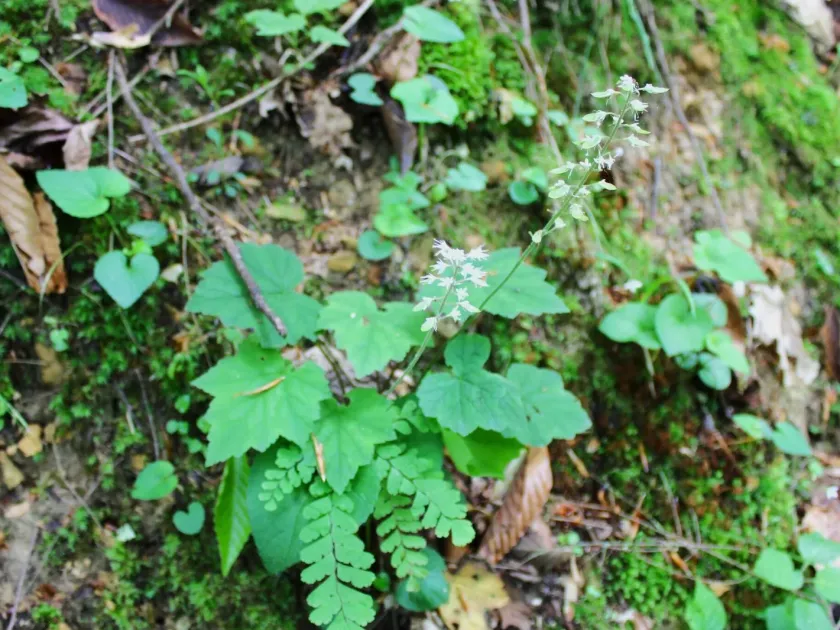
Description
Sowing dates
Tiarella wherryi is effectively propagated through division of clumps or root cuttings during the early spring or late autumn. This method ensures that the offspring maintain the characteristics of the parent plant, facilitating quick establishment in the garden.
Seed propagation is also possible but requires a period of cold stratification to break seed dormancy. Seeds should be sown in late autumn or treated with cold storage to mimic natural winter conditions, leading to more uniform germination in the following spring.
When planting, ensure the crown of the plant is at or slightly above the soil surface. Planting too deep can cause the crown to rot, especially in moist conditions, while planting too shallow may expose the roots to premature desiccation.
Space plants approximately 20 to 30 centimeters apart to allow for proper airflow and natural spreading. Over time, the plants will form a dense mat of attractive foliage that effectively suppresses weeds.
A well-amended soil with organic matter, such as leaf mold or well-rotted compost, provides the best environment for root growth and helps maintain the necessary moisture levels for young transplants.
Growing requirements
Belonging to the Saxifragaceae family, Tiarella wherryi is a native woodland perennial valued for its mounding habit and delicate, bottle-brush-like flower spikes. It thrives best in environments that mimic its natural forest habitat.
The ideal soil for this species is moist, rich in organic matter, and well-drained. While it tolerates a variety of soil types, it prefers slightly acidic to neutral soil pH levels to facilitate optimal nutrient uptake.
Regarding light, this plant is a classic shade dweller. It requires partial to full shade to protect its leaves from scorching. In regions with cooler summer climates, it can handle slightly more light, provided the soil remains consistently moist.
Consistent moisture is the cornerstone of successful cultivation. Although it does not like waterlogged conditions, it performs poorly if the soil dries out completely, as its shallow root system is sensitive to drought.
Fertilization should be kept light; an annual application of compost in the early spring is usually sufficient to support healthy growth and vibrant flowering throughout the season.
Main diseases and pests
Slugs and snails are the primary pests of Tiarella wherryi. These creatures are particularly attracted to the succulent foliage during damp weather, and if left uncontrolled, they can rapidly diminish the aesthetic appeal of a planting.
Fungal diseases, including powdery mildew and various types of root rot, are common issues, especially when plants are grown in conditions with poor drainage or insufficient air circulation between the leaves.
Effective pest management involves maintaining a clean garden bed, clearing away damp debris, and potentially using safe molluscicides if infestation levels become too high for the plants to tolerate.
Preventing fungal infections requires avoiding overhead irrigation whenever possible, as wet leaves are more susceptible to spores. If the plant shows signs of distress, ensuring proper spacing and removing dead foliage are the first steps toward recovery.
For more severe cases of disease, the application of fungicides specifically formulated for ornamental plants can help restore the health and vitality of the Tiarella cluster.