
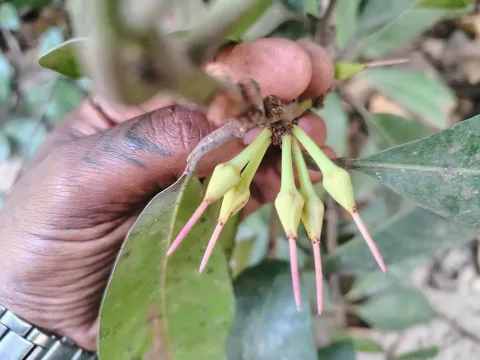
Madhuca neriifolia
Madhuca neriifolia
Madhuca neriifolia is a tropical evergreen tree belonging to the Sapotaceae family. It is a slow-growing species typically found in the humid tropical regions of South Asia, often thriving in riverine and riparian habitats.
What the section contains
Madhuca neriifolia
The botanical profile of the tree features leathery, lanceolate leaves and a sturdy trunk, allowing it to withstand the moist conditions prevalent in its native environment. It is a resilient species well-adapted to areas with high precipitation levels.
For successful cultivation, the tree requires deep, fertile, and well-drained soils. While it favors riparian settings, it cannot tolerate waterlogged conditions for extended periods, as this severely impacts root development and tree vitality.
Climatic preferences for Madhuca neriifolia include a tropical climate with high, stable temperatures throughout the year. The species lacks cold tolerance, which limits its commercial range to tropical regions with no significant dry or cold seasons.
Economically, the tree is highly regarded for its oleaginous seeds, which are harvested to extract oils used in various local applications. Additionally, the timber is prized for its density and durability, serving multiple structural purposes in local carpentry.
The primary agricultural threats to Madhuca neriifolia include fungal pathogens that target the root system in poorly drained soils. The development of root rot is the most significant cause of mortality in nursery and young plantation settings.
Foliar diseases, such as leaf spot fungi, can compromise the tree's health by reducing its photosynthetic surface area. These diseases are particularly prevalent in dense, poorly ventilated stands where high humidity is trapped in the canopy.
Insect pests, including various leaf-chewing larvae, can affect the growth rate of juvenile trees. While mature trees are generally more resilient, heavy infestations can still lead to reduced vigor and diminished seed production capacity.
Weed infestation during the establishment phase acts as a major limiting factor for growth. Competition for nutrients and water with invasive weeds can suppress the development of young seedlings, necessitating systematic cleaning of planting sites.
Management strategies involve rigorous pruning to maintain canopy ventilation, which significantly reduces the risk of fungal outbreaks. Sustainable integrated pest management (IPM) is recommended to minimize reliance on synthetic chemical interventions.