
Agathosma apiculata
Agathosma apiculata
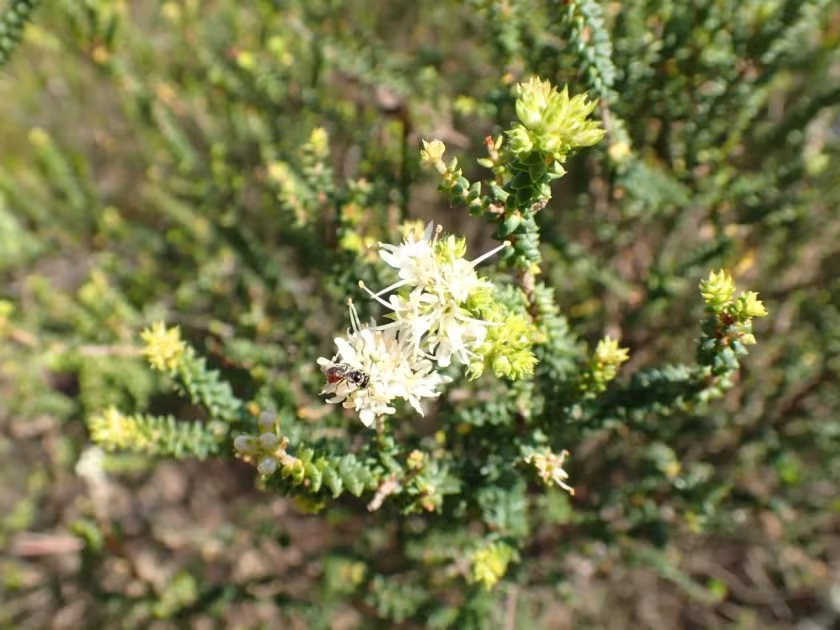
Description
Growing requirements
Agathosma apiculata is a perennial shrub belonging to the Rutaceae family, native to the diverse botanical regions of South Africa's Cape Province.
The plant thrives in well-drained, sandy, or stony soils, mimicking the nutrient-poor conditions of its natural fynbos habitat, where water drainage is crucial.
It requires a Mediterranean-like climate, characterized by mild, wet winters and warm, dry summers, and must be protected from frost and freezing temperatures.
Optimal growth is achieved in sunny locations with slightly acidic soil, which promotes the accumulation of essential oils within the glandular leaf tissues.
Agricultural management involves regular pruning post-flowering to maintain bush density and encourage the development of new, high-quality foliage.
Yield
The primary economic output of Agathosma apiculata is its aromatic leaves, prized for their high essential oil content, which contains key pharmacological compounds.
The yield of raw material depends heavily on the plantation's age, typically reaching optimal productivity levels after the third year of cultivation.
Harvesting is performed by selectively clipping the leafy branches, ensuring that the plant retains enough foliage to sustain vegetative regeneration.
Post-harvest processing involves slow, shaded drying to prevent the evaporation of volatile compounds and maintain the integrity of the essential oils.
Quality control standards require strict monitoring of the drying process and storage conditions to preserve the therapeutic properties of the botanical extract.
Main diseases and pests
The most significant threat to the crop is root rot, caused by overwatering or soil conditions with poor drainage, which rapidly impacts plant health.
In greenhouse or indoor environments, spider mites represent the most common pest, thriving in the low-humidity conditions often maintained for the crop.
Scale insects can also infest the stems and leaves, extracting nutrients and weakening the plant's structural development and immune response.
Integrated pest management strategies are essential, focusing on airflow optimization and climate control to discourage fungal and insect infestations.
Because the plant is intended for medicinal use, the use of synthetic pesticides must be strictly regulated to ensure the purity of the final product.