
Field madder
Sherardia arvensis L.
Description
Growing requirements
Field madder (Sherardia arvensis L.) is an annual herb belonging to the Rubiaceae family. While it is not an agricultural crop, it is a common plant found in cultivated fields, where it acts as a persistent weed competing with crops for resources.
The plant thrives in well-drained, fertile soils with a neutral or slightly acidic pH. It demonstrates a high level of ecological plasticity, appearing frequently in sandy loams, fields, and along roadsides throughout Europe and temperate parts of Asia.
In terms of climate, it prefers regions with mild, moist spring conditions. It is well-adapted to the temperate climate and can germinate across a wide temperature range, making it a difficult weed to eradicate once it establishes itself in the seed bank.
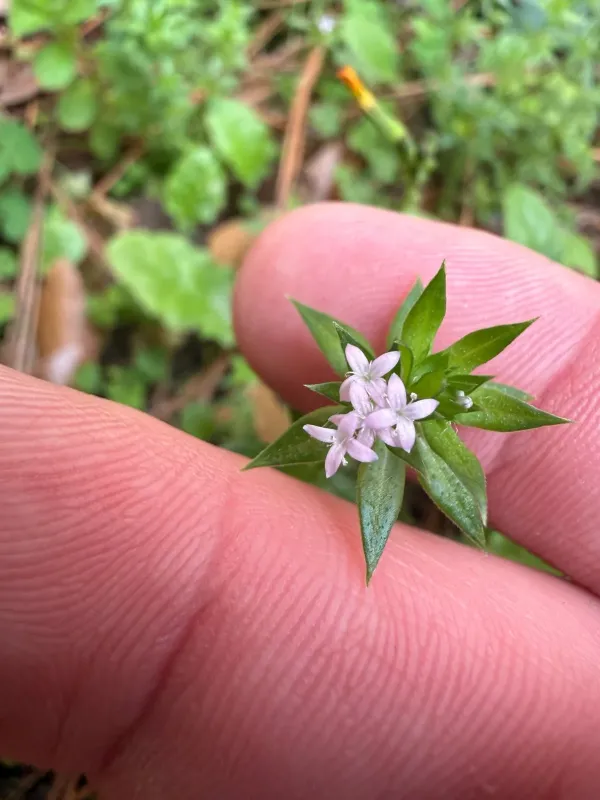
Botanically, field madder is distinguished by its prostrate, four-angled stems that form mat-like structures. Its leaves are arranged in whorls, and it produces small, clustered pink or lavender flowers, making it identifiable even in dense crop stands.
There is no economic value for this plant as a crop. In agricultural practice, it is strictly considered a competitor. Its aggressive growth pattern can lead to significant yield losses if left uncontrolled, particularly in thin crop stands where it can quickly dominate.
Main diseases and pests
Field madder is susceptible to common fungal pathogens, including powdery mildew and various rust fungi. However, these diseases are rarely effective biological control agents as the plant is highly resilient and recovers quickly under favorable moisture.
Insect pests such as aphids and certain mite species may inhabit the plant, but they generally provide negligible suppression. The primary threat to the crop is not the herb itself being attacked, but rather the herb being a host for pathogens that can spread to the main crop.
The primary concern regarding this plant is its seed bank longevity. A single plant can produce a vast amount of seeds that remain viable in the soil for several years, ensuring that future crop cycles remain infested with minimal external triggers.
Agricultural management relies on mechanical practices like deep plowing and harrowing, which disrupt the root system and bury seeds to depths where they cannot germinate effectively.
Chemical intervention includes the application of herbicides at the seedling stage. For optimal control, it is recommended to monitor the fields early in the season, as the plant becomes much harder to manage once it develops its spreading, mat-like growth habit.