
Hillia parasitica
Hillia parasitica
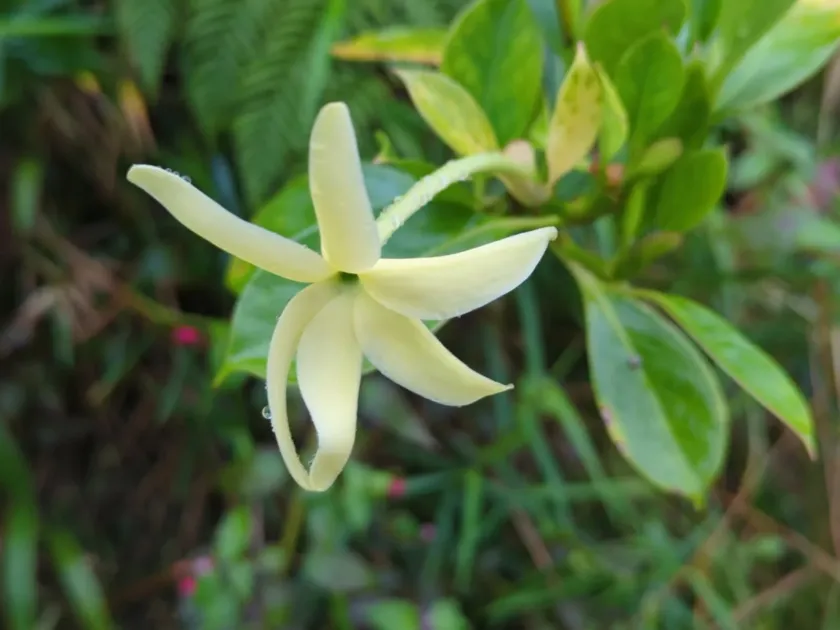
Description
Growing requirements
Hillia parasitica is a captivating member of the Rubiaceae family. Native to the tropical regions of Central and South America, it primarily exists as an epiphyte, anchoring itself to tree branches and trunks within the forest canopy.
The cultural requirements for this species focus on replicating its natural tropical environment. It thrives under bright, filtered light conditions, as intense direct sun exposure is known to scorch its succulent, leathery foliage.
Successful cultivation depends heavily on the growing medium. A high-quality, airy, and well-draining epiphytic mix, typically consisting of orchid bark, coconut husk, and charcoal, is essential to ensure adequate root aeration.
Temperature management is critical for the healthy development of this plant. It prefers warm conditions ranging from 20 to 26 degrees Celsius, with a constant, high level of atmospheric humidity being a non-negotiable requirement for vitality.
Irrigation must be practiced with caution. Water quality should be soft, and the substrate should be kept consistently moist but never waterlogged to prevent root suffocation and maintain healthy nutrient uptake cycles.
Main diseases and pests
Root rot remains the most significant threat to Hillia parasitica. This condition is almost exclusively caused by overwatering or the use of heavy, non-porous substrates that trap moisture against the roots for too long.
Pest infestation is another common issue, particularly with spider mites and scale insects. These pests thrive in dry environments and can quickly sap the plant's energy if not addressed with targeted horticultural soaps or oils.
Poor ventilation can lead to the rapid onset of fungal pathogens, specifically those causing leaf spot diseases. Ensuring adequate airflow around the foliage is a key preventive measure in greenhouses or home settings.
Nutrient deficiencies, particularly regarding trace minerals, can cause chlorosis in older leaves. Periodic applications of dilute, balanced fertilizers specifically formulated for epiphytes are recommended during the active growing phase.
Regular visual inspections of the stems and leaf undersides are highly recommended to catch early signs of pest activity or pathogen damage, allowing for prompt intervention before the plant's structural health is compromised.