
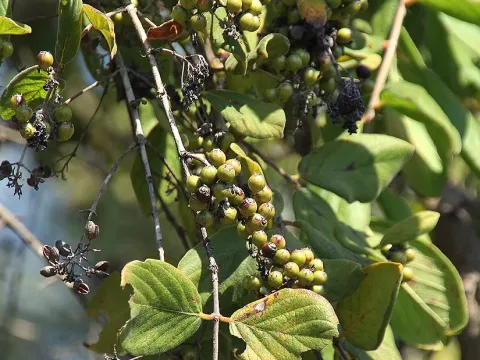
Crossopteryx
Crossopteryx
Crossopteryx (Crossopteryx febrifuga) is a monotypic genus of flowering plants within the Rubiaceae family. Native to tropical Africa, this species is typically found in savanna woodlands and diverse shrublands, thriving in areas with distinct wet and dry seasons.
What the section contains

Crossopteryx
The plant exhibits remarkable hardiness, allowing it to grow in varied, often nutrient-poor, soils, including stony and rocky terrains. It requires ample exposure to sunlight and is well-adapted to the high temperatures characteristic of its native sub-equatorial climate.
Botanically, it is classified as a deciduous tree or shrub. Its leaves are opposite and ovate, often featuring pubescence that aids in moisture retention. The flowers are small, fragrant, and arranged in dense terminal inflorescences, attracting various pollinators during the rainy season.
Its root system is deep and expansive, providing stability and access to water resources during prolonged droughts. This structural efficiency allows the plant to persist in harsh environments where other species might fail.
Economically, the plant is primarily valued for its traditional medicinal applications. The bark and roots are widely utilized in indigenous practices for their antipyretic, anti-malarial, and anti-inflammatory properties, reflecting its scientific name, febrifuga.
The main threats to Crossopteryx populations involve intensive harvesting of the bark for traditional medicine, which, if done improperly, causes severe damage to the tree's vascular system and often results in death.
Fungal pathogens targeting foliage are common during high-humidity periods, although these typically impact growth rates in nursery settings rather than posing a fatal risk to mature trees in the wild.
Wood-boring insects present a potential risk to timber quality. These pests create galleries in the wood, making the trees less suitable for construction purposes and potentially introducing decay-causing pathogens.
Habitat fragmentation due to land-use changes and agricultural expansion poses a long-term risk to genetic diversity. Protecting established savanna corridors is essential for the natural regeneration of the species.
Wildfires, common in African savannas, can severely impact sapling recruitment. While mature specimens are relatively fire-resistant due to their bark properties, young trees require fire management to reach maturity.