
Corn cleavers
Galium tricornutum
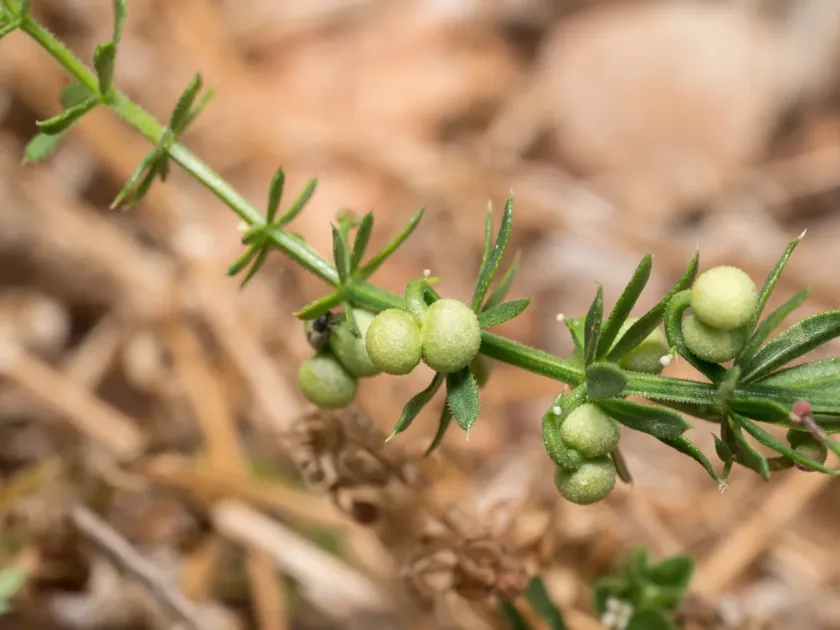
Description
Sowing dates
Corn cleavers (Galium tricornutum) is typically characterized as an early spring weed that emerges simultaneously with winter and spring cereals. Seed germination usually commences in early spring, synchronized with the growing season of major small-grain crops.
The biological adaptation of this plant allows it to establish quickly in cereal fields, creating significant early-season competition for nutrients and water. Rapid root development allows it to secure its place in the soil profile within the first few weeks of growth.
Germination can occur under a variety of conditions, with a preference for cool, moist soil typical of the early spring season. In regions with mild winters, germination may even start in the autumn, leading to overwintering of the plant in a rosette stage.
Seeds are generally found at a depth of 2 to 5 centimeters, which is the optimal range for rapid emergence. However, these seeds can remain viable at deeper levels, making deep soil inversion a strategic option for long-term population management.
The germination period is often protracted, which poses challenges for chemical control programs. Agronomists must monitor fields closely to ensure that herbicide applications cover the majority of the germinating population effectively.
Growing requirements
Galium tricornutum thrives in fertile, well-structured, and calcium-rich soils. It shows a particular affinity for heavy clay or loamy soils with a neutral or slightly alkaline pH level, which provides the necessary mineral nutrition for its robust development.
Climatic requirements focus on moderate humidity during the vegetative phase. While it can withstand periods of fluctuating temperatures, it requires consistent moisture to achieve its full potential and maximum seed production capabilities.
Light availability is crucial for the plant's growth, although it is capable of tolerating temporary shading. In dense crop stands, its development may be slightly suppressed, but it remains a competitive weed that can survive in various light conditions.
Agronomic management requires consistent crop rotation, specifically incorporating row crops that allow for inter-row cultivation. This practice helps break the life cycle of the weed and reduces the total seed bank in the soil over time.
Chemical control remains the most widespread approach, involving the use of selective herbicides. For the best results, treatments should be applied when the weeds are in the early, vulnerable stages of development, prior to the formation of rigid, scrambling stems.
Main diseases and pests
The primary agricultural threat posed by corn cleavers is its ability to induce lodging in cereal crops. By utilizing cereal stalks as support, the weed compromises the structural integrity of the crop, making mechanical harvesting difficult and expensive.
While the plant is susceptible to common fungal pathogens like powdery mildew, these rarely lead to significant reductions in weed populations in field conditions. The weed exhibits high resilience to various environmental stressors and common agricultural pathogens.
Insects such as weevils may target the reproductive organs of the plant, potentially reducing seed production. However, this is usually insufficient to serve as a biological control agent for large-scale infestations.
- Reduction in grain quality due to shading and lodging.
- Increased soil seed bank due to prolific seed production per plant.
- Competition for nitrogen, phosphorus, and potassium in high-density cereal stands.