
Quinine tree
Cinchona pubescens Vahl
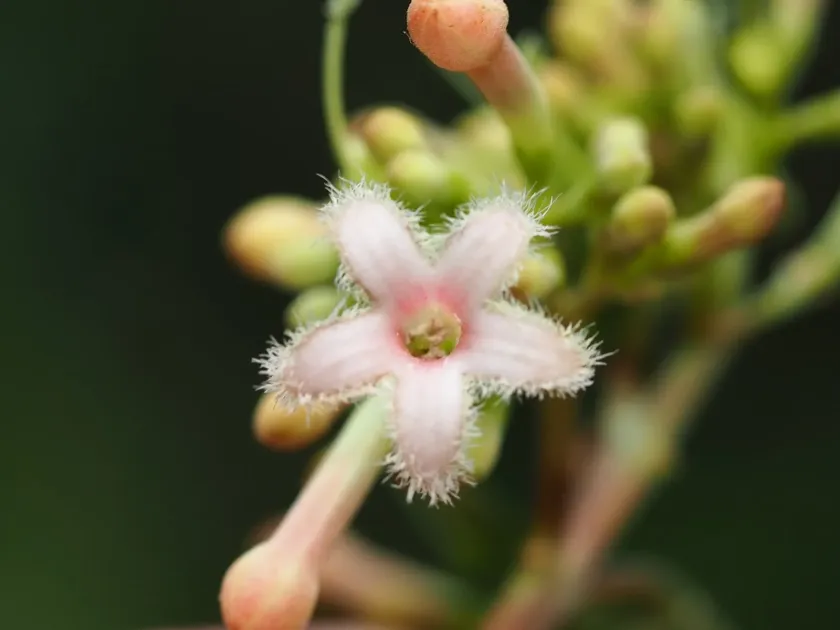
Description
Growing requirements
The quinine tree (Cinchona pubescens) belongs to the Rubiaceae family and is a prominent evergreen species naturally distributed in the Andean regions of South America.
This species thrives in high-altitude tropical environments, preferring areas with consistent rainfall, high humidity, and temperatures that do not drop to freezing levels.
Regarding soil requirements, the tree demands well-draining, rich, and slightly acidic soils. Good aeration is essential to prevent root rot, which is a common issue in tropical soil types.
Cultivation typically takes place at altitudes ranging from 1,500 to 3,000 meters above sea level, where the specific climatic variables trigger the highest synthesis of quinine alkaloids.
Agrotechnical practices involve careful management of shade for seedlings during their initial growth stages, transitioning to full exposure as the trees reach maturity.
Yield
The primary economic output of Cinchona pubescens is its bark, which is harvested for the extraction of various alkaloids, most notably quinine and quinidine.
These alkaloids serve as critical components in the pharmaceutical industry, particularly for the production of anti-malarial medications and muscle relaxants.
In addition to medicinal use, the bark is valued in the beverage industry, serving as the essential bittering agent for tonic water, a popular global mixer.
Sustainable harvesting techniques are vital; stripping the bark correctly allows for regeneration, ensuring that individual trees remain productive over several years of growth.
The final yield quality is heavily dependent on the tree's maturity, with optimal alkaloid levels typically found in trees that have reached at least a decade of growth.
Main diseases and pests
The most significant pathological threats to Cinchona pubescens include various fungal pathogens that attack the root system, often exacerbated by poor drainage in high-rainfall zones.
Foliar diseases such as powdery mildew can affect the canopy, especially in dense plantations where airflow is restricted, leading to leaf drop and decreased vigor.
Pests including various scale insects and lepidopteran larvae pose risks, as they can cause significant damage to tender new growth and bark tissues.
In some regions, Cinchona pubescens is classified as an invasive species due to its prolific seed dispersal, which can threaten native plant biodiversity if left unmanaged.
Successful management requires an integrated approach to pest and disease control, utilizing both biological methods and rigorous field monitoring to maintain plantation health.