
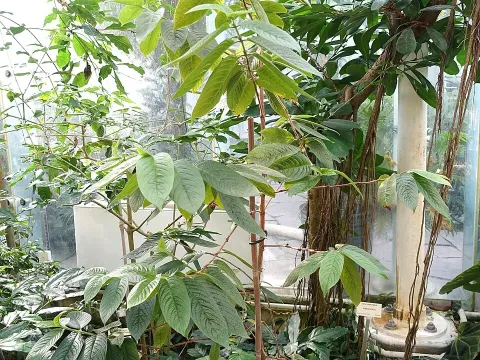
Bertiera
Bertiera
The genus Bertiera comprises various species of shrubs and small trees belonging to the Rubiaceae family. These plants are native to the tropical regions of Africa, Asia, and the surrounding islands.
What the section contains


Bertiera
In their natural environment, these plants thrive in the understory of dense tropical forests. This determines their specific need for high humidity and protection from extreme temperature fluctuations.
Cultivation requires stable warm temperatures, ideally between 22 and 28 degrees Celsius, to maintain active growth throughout the year without entering a dormant phase.
The preferred soil type is a nutrient-rich, acidic, and well-draining substrate. Proper aeration is crucial to prevent the roots from suffocating in overly dense or waterlogged mixtures.
While the plants need sufficient light to develop, they are sensitive to direct sunlight. Providing filtered or diffused light is essential to avoid chlorophyll damage and leaf scorching.
Indoor cultivation often faces challenges from common sap-sucking pests, including spider mites and scale insects, which proliferate in low-humidity environments.
Fungal pathogens such as leaf spot and root rot are significant threats, especially if the air circulation is poor or the soil remains too moist for extended periods.
Nutrient deficiencies, particularly involving micronutrients like iron or magnesium, can cause chlorosis, making the leaves turn yellow while the veins remain green.
Preventive measures include maintaining proper sanitary conditions in the greenhouse and ensuring that each plant has adequate space to prevent pathogen transmission.
Effective management strategies involve regular monitoring and the use of integrated pest management practices to minimize the reliance on chemical inputs.