
Bertiera racemosa
Bertiera racemosa
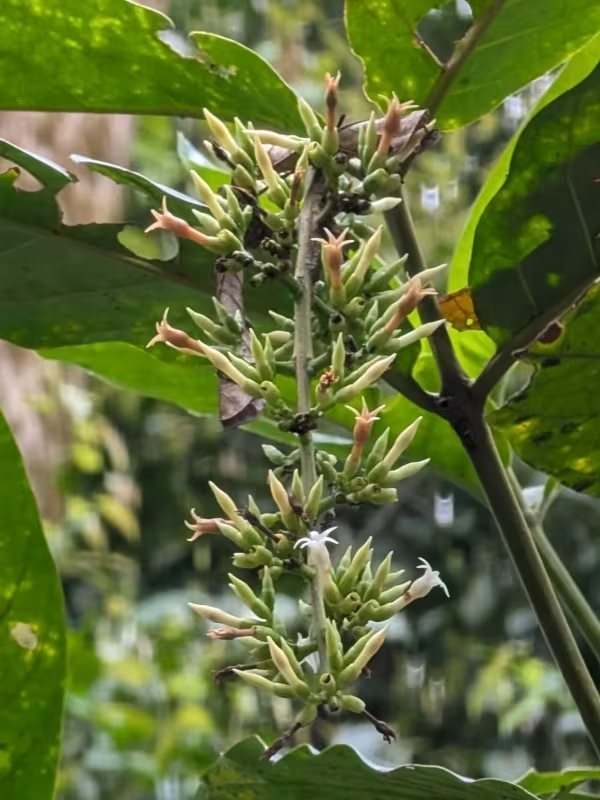
Description
Growing requirements
Bertiera racemosa is a notable shrub or small tree belonging to the Rubiaceae family, predominantly found in the tropical rainforests of West and Central Africa. As a member of the coffee family, it shares many morphological characteristics with its relatives, thriving in the dense, shaded understories of humid forest ecosystems.
Successful cultivation of this species requires strict adherence to tropical environmental parameters, specifically maintaining a consistently high relative humidity and temperatures typically ranging between 22 and 30 degrees Celsius. Exposure to cold or dry air is detrimental, often leading to rapid leaf drop and plant decline in non-native environments.
The preferred growing medium consists of nutrient-rich, acidic to neutral soil that provides excellent drainage while maintaining adequate moisture retention. Because it is a forest understory plant, it exhibits a preference for filtered or dappled sunlight, making it suitable for shaded greenhouse cultivation rather than direct field exposure.
Beyond its ecological importance as a food source for local bird species, Bertiera racemosa has historically been utilized in traditional medicine. Researchers are increasingly evaluating the plant for secondary metabolites, particularly alkaloids and antioxidants, which may have future applications in pharmacological and agricultural science.
Botanically, the plant is recognized by its opposite leaves, which often feature distinct venation, and its characteristic racemes of small, white to pale yellow flowers. These inflorescences are followed by soft, berry-like fruits, which are adapted for zoochory, ensuring the plant’s continued propagation within its native tropical habitat.