
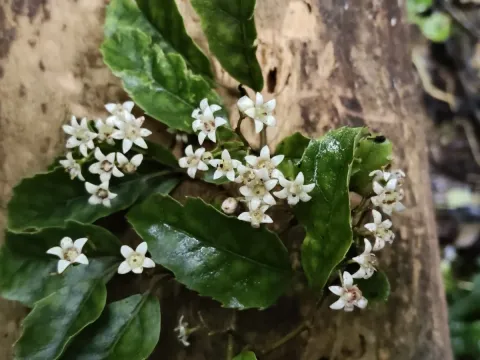
Putaputawētā
Carpodetus serratus
Carpodetus serratus, commonly known as Putaputawētā or marble leaf, is a small tree belonging to the Rousseaceae family. It is widely recognized in its native New Zealand for its distinctive variegated foliage and its ability to thrive in forest margins.
What the section contains
Putaputawētā
Successful cultivation requires soil that is rich in organic matter and maintains consistent moisture levels. The species performs best in semi-shaded locations, which mimic the light conditions of its natural forest habitat and protect it from excessive heat.
The climate requirements include protection from severe frost, especially for young specimens. While established plants are somewhat hardy, providing a sheltered position significantly enhances growth rates and overall plant vigor.
Maintenance involves routine mulching to suppress weeds and retain soil moisture, which is critical during the initial establishment period. Regular irrigation is recommended during dry spells to prevent drought stress.
Fertilization with balanced organic matter in early spring supports healthy canopy development. Pruning should be kept to a minimum, focusing only on removing dead or crossing branches to maintain the tree's natural architectural form.
Common pests include scale insects and aphids, which are particularly problematic in dry conditions. Keeping the plant hydrated and providing good air circulation are the primary methods for natural pest management.
Fungal pathogens causing leaf spots may occur in environments with poor ventilation. Ensuring that the foliage can dry quickly after rain is essential for preventing the spread of these common plant diseases.
Root rot is a major threat in poorly drained soils. Gardeners should ensure the planting site has excellent drainage to avoid waterlogging the root zone, which can be fatal to the tree.
Physical damage caused by browsing animals or strong winds can lead to secondary infections. Protective staking and fencing are often necessary in the early stages of the plant's life in open garden spaces.
Soil compaction can impede oxygen uptake by the roots, leading to a general decline in the tree's health. Avoiding heavy foot traffic around the base of the plant is vital for long-term health.