
Roussea
Roussea
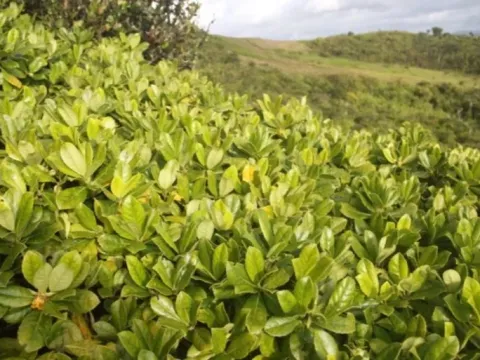
Roussea (Roussea simplex) is a rare evergreen woody vine that belongs to the monotypic family Roussoaceae. It is a highly specialized endemic species native exclusively to the island of Mauritius, found in specific mountain rainforest habitats.
What the section contains

Roussea
The plant thrives in regions characterized by high atmospheric humidity and relatively cool tropical mountain temperatures. It is biologically adapted to the interior of dense forests where light intensity is lower and moisture levels remain high throughout the year.
Soil requirements for Roussea are stringent, favoring acidic, organic-rich substrates typical of volcanic forest floors. The plant requires a well-drained medium that is constantly moist but never waterlogged to prevent root decay.
Cultivation of Roussea is extremely challenging due to its complex symbiotic relationships with local insects and specific microclimatic needs. It is rarely seen in professional agriculture and is maintained mostly in botanical collections under strict supervision.
Morphologically, the plant is a climber that uses adventitious roots to scale support trees. Its prominent, colorful flowers are a distinguishing feature, evolved to attract specific endemic geckos for pollination rather than insects.
The primary threat to Roussea is the progressive destruction of its natural forest habitat in the higher altitudes of Mauritius. Habitat fragmentation significantly limits the ability of the species to propagate naturally.
Invasive flora, particularly aggressive woody weeds introduced to the island, compete with Roussea for limited light and space in the understory. This competition often results in the displacement of native species by faster-growing aliens.
The plant is susceptible to fungal infections in environments with poor air circulation. While specific pests are not as well-documented as in commercial crops, the overall weakness of fragmented populations makes the species vulnerable to pathogens.
Climate change poses a long-term risk to Roussea, as the mountain ecosystems it inhabits are particularly sensitive to shifts in rainfall patterns and temperature increases, which can alter the delicate local microclimate.
Conservation biology remains the only context in which Roussea is currently addressed. There is no commercial harvesting or agricultural use for this species, as its survival is a priority for biodiversity protection programs.