
Kandelia obovata
Kandelia obovata
Description
Sowing dates
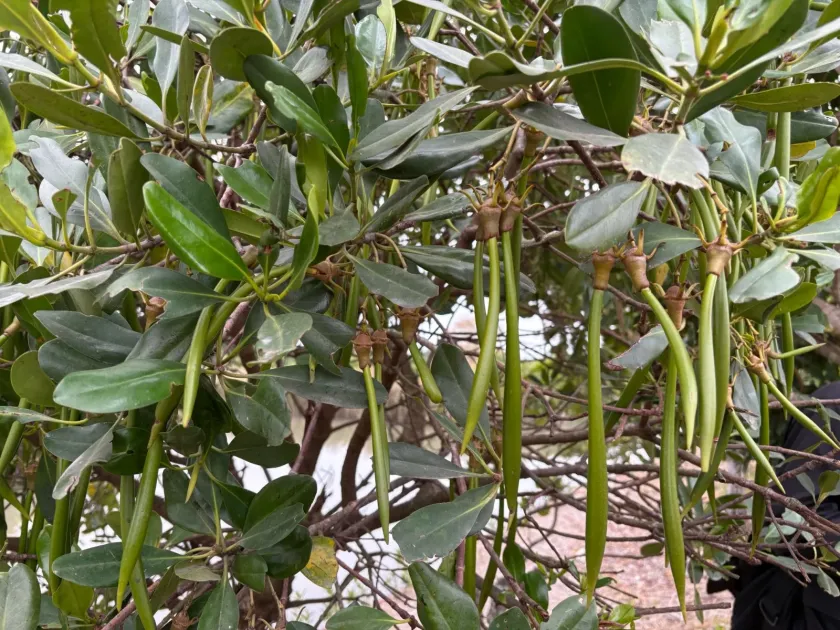
Kandelia obovata is a resilient mangrove species belonging to the Rhizophoraceae family. It is distinct for its viviparous reproduction, where seedlings develop directly on the parent plant before detaching.
In nursery management, propagules are carefully collected at peak maturity. These are then temporarily maintained in controlled brackish water environments before being transplanted into intertidal zones.
Planting efforts usually target silt-rich tidal flats. Seedlings must be inserted deep enough into the sediment to withstand the mechanical force of incoming and outgoing tidal currents.
Optimal planting seasons are scheduled to avoid peak storm activity. This allows the young plants to establish a firm root system before they are subjected to extreme hydraulic stress.
Restoration projects often utilize varying planting densities, ranging from 5,000 to 10,000 propagules per hectare, to ensure optimal canopy closure and soil stabilization over time.
Growing requirements
This species thrives in specific tropical and subtropical intertidal environments. It requires a balance of saline water and sediment deposition typical of estuaries and sheltered coastal lagoons.
Soil conditions must consist of fine-grained, nutrient-rich silt or clay. Such substrates are essential as they retain the moisture necessary for root respiration in oxygen-depleted anaerobic environments.
Climatic requirements demand consistent warmth, as the species is highly sensitive to frost. Its natural distribution is largely constrained to regions where temperatures rarely drop below freezing levels.
Light intensity is a critical factor for juvenile growth; Kandelia obovata is shade-intolerant and requires full exposure to solar radiation to maintain its vigorous development rate.
The species demonstrates excellent salt tolerance, making it an ideal candidate for protecting coastal shorelines from erosion and storm surges in brackish aquatic systems.
Main diseases and pests
Pests such as specialized leaf-chewing insects can cause significant defoliation, particularly in dense stands where humidity promotes pest proliferation.
Fungal infections in the root zone represent a constant threat to younger, less established trees, often exacerbated by waterlogging or poor drainage in stagnant zones.
Environmental degradation, including heavy metal pollution and oil spills in coastal waters, poses a critical risk to the health and vitality of mangrove plantations.
Human-induced activities, such as coastal construction and infrastructure development, often fragment habitats and disrupt the natural hydrological patterns required for the species' survival.
The cumulative effect of rising sea levels remains a primary long-term threat, potentially submerging habitat areas faster than the species can naturally migrate inland.