
Ceriops tagal
Ceriops tagal
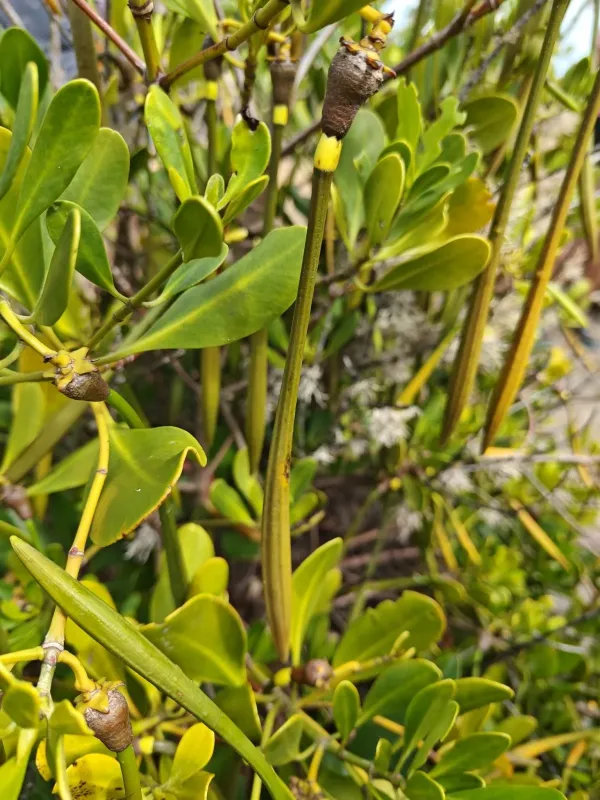
Description
Growing requirements
Ceriops tagal is a prominent member of the Rhizophoraceae family, widely recognized as a primary mangrove species. It naturally occupies intertidal zones throughout the tropical regions of the Indo-Pacific, demonstrating significant adaptation to saline environments.
The plant thrives in nutrient-rich muddy substrates and estuaries, where it utilizes unique physiological mechanisms to exclude salt from its vascular system. It prefers high-temperature environments and requires consistent tidal influx to maintain its optimal biological rhythm.
Botanically, it is characterized by dense, hardwood stems and a complex root architecture that anchors it securely in shifting sediments. The species propagates through viviparous seeds (propagules) that drop into the water, allowing it to colonize new tidal areas effectively.
In terms of economic utility, Ceriops tagal is highly valued for its dense, termite-resistant wood, which is extensively utilized for fuel and construction in coastal communities. Its bark is specifically harvested for the commercial extraction of tannins used in leather tanning and dye industries.
From an environmental perspective, this species is essential for shoreline stability, acting as a biological barrier against erosion. It supports complex food webs by providing nursery areas for numerous fish species, crustaceans, and mollusk populations.
Main diseases and pests
Major threats to Ceriops tagal populations include habitat loss due to land conversion for aquaculture and urban coastal development. Changes in water quality and sedimentation rates significantly reduce the survival rate of new propagules.
Pest pressures often involve wood-boring insects and crustaceans that exploit the tree structures. Additionally, fungal pathogens associated with water stagnation can cause significant damage to young forest stands, leading to localized die-offs if ecological conditions are not managed.