
Chinese jujube
Ziziphus sativa Gaertn.
Description
Sowing dates
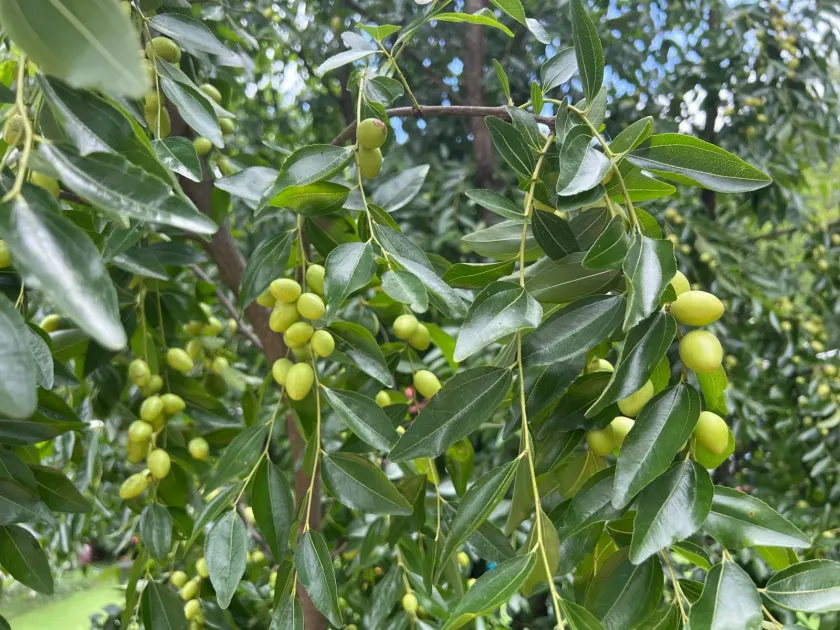
Chinese jujube (Ziziphus sativa Gaertn.) is a deciduous tree belonging to the Rhamnaceae family, valued for its nutritious fruits.
Propagation is commonly achieved through seed germination, although seeds require a period of stratification to break dormancy effectively.
For vegetative propagation, grafting and root cuttings are the preferred methods used in commercial nurseries to ensure genetic uniformity.
Planting should be performed in well-prepared soil during the early spring before the buds begin to swell and active growth starts.
Spacing between trees should be sufficient to allow for full crown development, typically requiring 4 to 6 meters depending on the rootstock.
Growing requirements
This species thrives in warm, temperate climates and is known for its remarkable heat tolerance and ability to withstand extreme summer temperatures.
The tree prefers full sunlight and performs poorly in shaded areas, where fruit development is often delayed or significantly reduced.
Jujube is highly adaptable to various soil types but requires excellent drainage, as the roots are sensitive to waterlogging and poor aeration.
It displays high tolerance to drought, making it an excellent candidate for regions with scarce rainfall and arid environmental conditions.
While mature trees are frost-hardy, young plants require protection during their first winters to prevent cold damage to the tender stems.
Yield
Commercial orchards typically start producing fruit 3 to 4 years after planting, depending on the cultivar and the cultural practices employed.
A healthy, mature tree can produce a substantial yield, often exceeding 50 kilograms of fruit per season with optimal irrigation and fertilization.
Fruit set is heavily influenced by cross-pollination, so planting multiple compatible varieties in an orchard is recommended to boost output.
Pruning is essential for maintaining tree structure, promoting light penetration, and encouraging the growth of new fruiting spurs for the next season.
Proper nutrient management, specifically phosphorus and potassium levels, plays a critical role in increasing fruit quality and total yield.
Main diseases and pests
Jujube trees are renowned for their natural hardiness, being less susceptible to common orchard pests compared to other fruit species.
Potential threats include aphids and spider mites, which can cause leaf drop if infestations are not controlled during dry spells.
Fungal issues like rust may occur in regions with high humidity, necessitating proper spacing to improve air circulation within the canopy.
Monitoring the tree for borers is important in older orchards, as these pests can compromise the structural integrity of the main trunk.
Integrated pest management strategies focusing on biological control are sufficient to maintain healthy trees without reliance on heavy chemicals.
Harvesting
The harvesting window typically spans from late summer to autumn, depending on the climatic conditions of the growing region.
Fruits are considered mature when their color shifts from green to a deep mahogany brown and the texture begins to soften slightly.
Mechanical harvesting is feasible for large-scale operations, using shakers to drop fruit onto catch frames or specialized netting.
Post-harvest handling involves careful grading to remove damaged fruit, followed by immediate cooling to extend the shelf life of fresh produce.
Jujube fruits are highly versatile, being consumed fresh, dried into dates, or processed into various culinary products like jams and syrups.