
Japanese raisin tree
Hovenia dulcis Thunb.
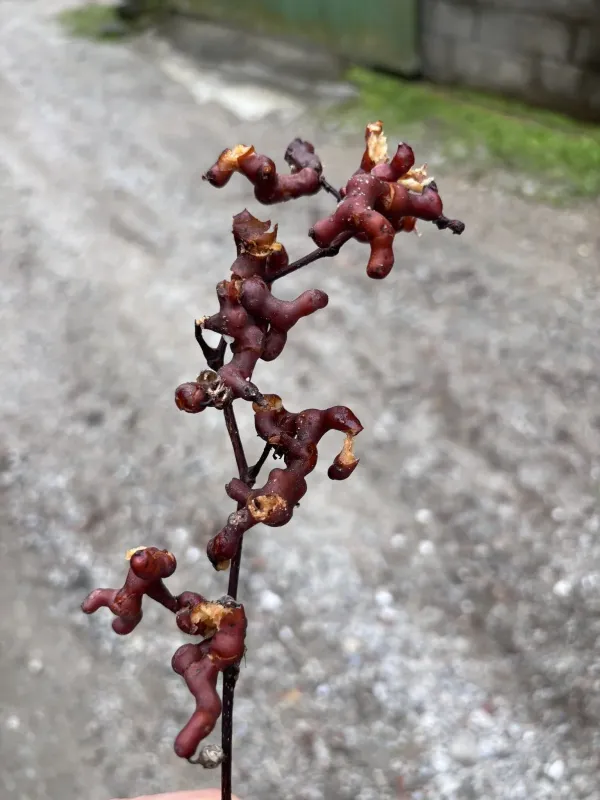
Description
Sowing dates
Hovenia dulcis, commonly referred to as the Japanese raisin tree, belongs to the Rhamnaceae family. Propagation is primarily achieved through seeds, which require a cold stratification process lasting at least two to three months to break dormancy and ensure high germination rates.
Seeds should be sown in a well-draining, nutrient-rich substrate during early spring, once soil temperatures consistently reach 15–18 degrees Celsius. Maintaining consistent moisture is critical during the initial germination phase to encourage uniform seedling emergence.
Seedlings are typically transplanted to their permanent locations after reaching one or two years of age. Given the eventual size of this tree, which can reach heights of 10 to 15 meters, adequate spacing is essential to ensure proper sunlight penetration and airflow.
While vegetative propagation through cuttings is possible, it is more complex and requires strictly controlled environmental conditions in greenhouses, making seed propagation the standard method for most orchards.
Early-stage growth requires focused nitrogen fertilization to promote foliage development, though as the tree matures, a transition to balanced fertilizers is recommended to support structural integrity and fruit production.
Growing requirements
The Japanese raisin tree thrives in temperate to subtropical climates and prefers full sun exposure. It is somewhat tolerant of light frost once established, but protecting young trees from severe winter temperatures is highly recommended.
Soil quality is paramount; the tree prefers fertile, loamy, or sandy soils with a neutral pH. Proper soil drainage is essential, as stagnant water is known to cause root diseases, which the tree is particularly sensitive to in its early years.
Regular irrigation is vital, especially during the flowering and fruit development stages in the summer. Mulching around the base of the tree is an effective technique to retain moisture and suppress competitive weed growth.
The species demonstrates moderate adaptability to various soil types, but it performs best in aerated environments. Excessive soil salinity should be avoided as it can severely inhibit root development and overall plant vigor.
Site selection should also consider wind exposure. While the wood is generally strong, young trees benefit from being planted in areas sheltered from strong winds to prevent mechanical damage and crown deformation.
Yield
The primary economic value of the Japanese raisin tree lies in its thickened, fleshy fruit stalks (peduncles), which turn sweet and raisin-like after the first frost. A mature tree can yield significant quantities of these stalks, often ranging between 30 and 35 kg per season.
The fruit stalks are rich in glucose, fructose, and organic acids, making them a valued ingredient in various food products, including jams, syrups, and fermented beverages. They are also known for their potential to alleviate the symptoms of alcohol intoxication.
Beyond its fruit, the tree is highly regarded for its timber. The wood is dense, durable, and features an attractive grain, making it a premium choice for high-quality furniture, cabinetry, and musical instrument manufacturing.
The tree also provides environmental benefits when used in agroforestry systems, contributing to soil health through the organic matter deposited by its autumnal leaf litter.
Sustainable harvesting techniques, including proper pruning and care, ensure consistent yields over time. Mature trees that are well-maintained can produce high-quality harvests for many decades.
Main diseases and pests
Hovenia dulcis generally exhibits high resistance to common fungal and bacterial diseases. However, in poorly drained soils or excessively humid environments, the risk of root rot increases, which can be fatal if not addressed early.
Pests like scale insects and aphids may occasionally infest young foliage. Integrated pest management strategies, such as biological control or localized treatments with soft soaps, are typically sufficient to manage these populations without extensive chemical use.
Rodent damage to the bark during the winter months represents a significant threat to young saplings. Installing protective mesh guards around the trunk is a standard and highly effective preventative measure.
To maintain tree health, regular sanitary pruning is necessary to remove dead or diseased wood. This practice improves air circulation and reduces the potential for infection sites to develop within the canopy.
Maintaining a clean garden environment by clearing debris around the trunk helps prevent the overwintering of pathogens, ensuring the long-term vitality of the orchard.
Harvesting
The harvest typically begins in late autumn, often following the first few frosts. This temperature drop is critical as it triggers the final sugar accumulation and flavor development in the fleshy peduncles, causing them to turn brown and lose their astringency.
Harvesting is performed by manually clipping the stalks. Care must be taken during this process to avoid damaging the fruiting spurs, as these structures are vital for future harvests.
Post-harvest management is essential due to the high sugar content of the stalks, which makes them susceptible to rapid fermentation. Ideally, they should be processed or dried immediately after picking.
Dried fruit stalks can be stored for extended periods and are often consumed as a natural snack or used as a nutrient-dense additive in various culinary applications.
Cold storage at temperatures ranging from 0 to 2 degrees Celsius is recommended for short-term preservation if fresh consumption is intended, as this inhibits microbial growth and maintains product quality.