
Berchemia racemosa
Berchemia racemosa
Description
Growing requirements
Berchemia racemosa, commonly known as the Japanese supplejack, is a woody deciduous vine belonging to the Rhamnaceae family. It is native to the temperate forests of East Asia, including Japan, China, and Taiwan, where it thrives in humid, well-drained soil environments.
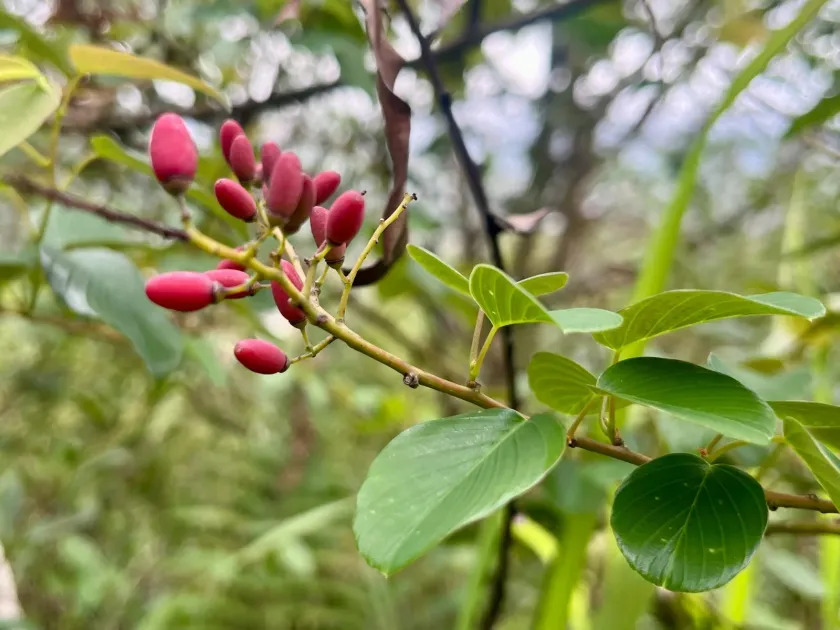
This climbing plant is prized for its vigorous growth and attractive, glossy foliage. The leaves are characterized by prominent, parallel lateral veins, which create a distinct, elegant texture. In late spring or summer, the plant produces small, fragrant flowers arranged in terminal panicles.
To cultivate Berchemia racemosa successfully, it is essential to provide a location with fertile, moisture-retentive soil. While the plant can tolerate partial shade, it performs best in sunny positions where it can receive at least six hours of indirect light daily.
The plant requires robust support structures, such as trellises, fences, or pergolas, to accommodate its climbing habit. Regular pruning is recommended to manage its size and prevent the vine from becoming overly tangled or invasive in smaller garden spaces.
In terms of climate, it prefers regions with mild winters and moderate summers. While the species is reasonably hardy, it benefits from a layer of organic mulch around the base to keep the root system cool and retain essential soil moisture during dry spells.
Main diseases and pests
Berchemia racemosa is generally considered a low-maintenance plant, but it is not immune to certain pests. Aphids and spider mites are the most common insects that may infest the foliage, particularly during hot and dry weather conditions, necessitating appropriate horticultural oils.
Fungal diseases, including leaf spot and powdery mildew, may occur if air circulation is inadequate. Planting the vine in a location with good airflow and avoiding overhead irrigation can significantly reduce the risk of these pathogens taking hold.
Root rot is a major threat if the plant is grown in waterlogged or heavy clay soils. Providing a well-drained substrate at the time of planting is the best preventative measure against soil-borne pathogens that attack the root zone.
Winter injury can occur in colder zones, specifically at the tips of young branches. Applying a protective winter cover or windbreak during the first few years after planting can help the vine establish its structure without sustaining freeze damage.
Finally, competition from aggressive weeds in the root zone can hinder growth. Keeping the base of the vine clear of weeds and debris is crucial for maintaining plant vigor and preventing the buildup of potential pest habitats in the immediate vicinity.