
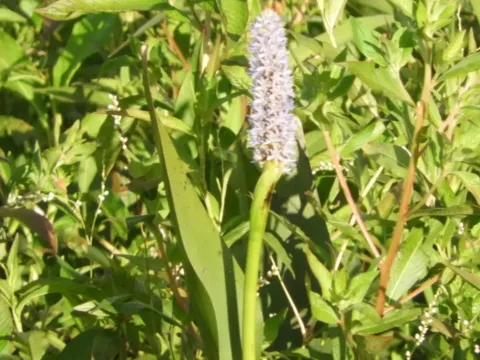
Pickerelweed
Pontederia
Pontederia cordata, commonly known as pickerelweed, is a perennial aquatic plant belonging to the Pontederiaceae family. It is primarily propagated vegetatively by dividing its robust rhizomes.
What the section contains
Pickerelweed
The ideal time for planting or dividing this crop is during the spring season when water temperatures begin to rise. This ensures that the plant establishes a healthy root system before the peak summer heat.
Planting is typically performed in mesh containers filled with a heavy loam-based compost. These containers allow for controlled growth and easier management of the plant within a pond environment.
If sowing seeds, they should be placed in wet soil immediately upon maturity. While germination is possible, seeds often require a period of cold stratification to break dormancy and ensure success.
Correct positioning of the containers is essential. Depending on the specific variety, the depth of water over the crown of the plant should generally be maintained between 10 and 25 centimeters.
Pickerelweed thrives in full sunlight, which is necessary for the production of its signature blue or white flower spikes. While it tolerates partial shade, flowering will be significantly reduced.
The soil should be rich in organic matter and clay. A heavy soil composition helps anchor the plant securely and provides the necessary nutrients for sustained vegetative growth throughout the season.
This crop is moderately hardy but requires protection in colder climates. During winter, containers should be moved to deeper water, below the frost line, to prevent the rhizomes from freezing solid.
Water quality is a significant factor in cultivation. Pickerelweed is efficient at nutrient uptake, making it a great choice for natural filtration systems in managed ponds and artificial wetlands.
Consistent maintenance involves the application of slow-release aquatic fertilizers. These are designed to be pushed into the soil in tablet form, providing a steady supply of nutrients during the active growing season.
Pontederia is generally resistant to pests and diseases. However, in poorly circulated water, the accumulation of decaying organic matter can lead to root rot and other bacterial issues.
Occasional infestations of aphids or spider mites can occur on the foliage, especially during hot and dry spells. A simple spray of water is often enough to dislodge these pests without chemical intervention.
Fungal leaf spots can develop if the plant is overcrowded or if the water surface is stagnant. Ensuring adequate space between individual plants promotes better airflow and reduces the risk of infection.
Competition from aggressive invasive weeds can pose a threat to the health of the pickerelweed colony. Periodic manual weeding of the surrounding water area is vital for the plant's long-term survival.
Environmental stress, such as extreme water level fluctuations, can weaken the plant. Maintaining a stable aquatic environment is the most effective way to prevent disease outbreaks and maintain plant vigour.
Pickerelweed is primarily cultivated for its ornamental value and ecological benefits. It is not harvested for commercial agricultural produce, though management of the plant biomass is standard.
At the end of the growing season, typically after the first frost, the foliage will naturally die back. It is important to trim these stems down to the waterline to keep the pond clean and debris-free.
Dividing rhizomes serves as the primary method of propagation and renewal. Removing overgrown clumps prevents the plant from becoming root-bound and helps maintain healthy, vibrant patches of growth.
In aquatic restoration projects, the biomass can be thinned out to manage nutrient levels in the water. This controlled removal acts as a form of maintenance that supports the overall health of the ecosystem.
Success in cultivating Pontederia is measured by its lush green foliage and consistent annual flowering. Proper end-of-season care ensures the plant enters dormancy safely and returns reliably the following year.