
Pontederia brevipetiolata
Pontederia brevipetiolata
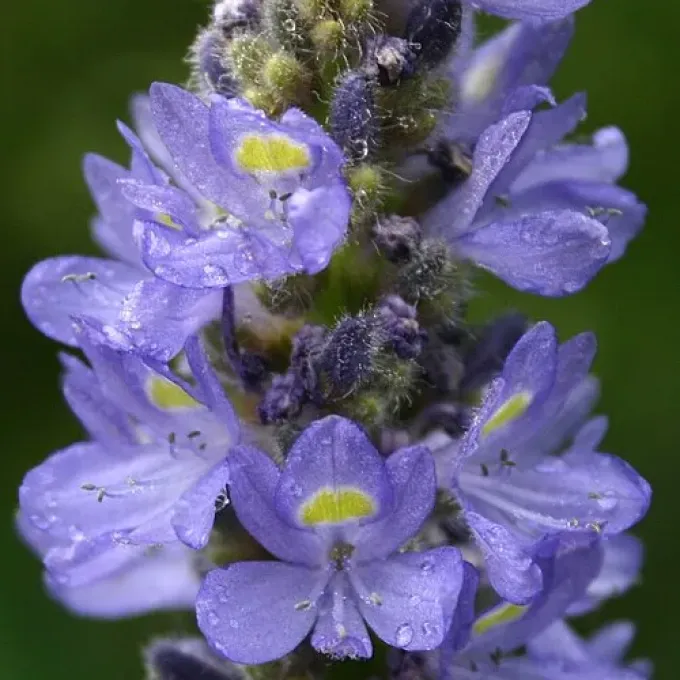
Description
Sowing dates
Propagation of Pontederia brevipetiolata is primarily achieved through division of the rhizomes during the active growing season.
The ideal time for planting occurs when the water temperature consistently remains above 15 degrees Celsius to encourage rooting.
Seed propagation is possible in controlled nursery environments using a saturated peat-based substrate and high-intensity lighting.
Young plants should be hardened off before being placed in their final pond positions to ensure they can withstand fluctuations in water chemistry.
Proper spacing is essential during planting, as the rhizomes tend to spread horizontally and fill the available substrate space efficiently.
Growing requirements
This aquatic perennial belongs to the Pontederiaceae family and is recognized for its elegant vertical growth habit.
It thrives in shallow water depths, typically requiring a soil-based substrate rich in organic matter to sustain its rapid development.
Full sun exposure is highly recommended to promote dense foliage and frequent production of its characteristic inflorescences.
The plant demonstrates significant tolerance to varying water conditions but prefers stable environments with minimal current.
In colder regions, it is essential to ensure that the rhizome remains below the freezing line of the pond to ensure overwintering success.
Yield
Pontederia brevipetiolata serves primarily as a decorative and functional macrophyte in residential and public landscape water features.
Its role in phytoremediation is significant, as it assists in stripping excess nitrates and phosphates from the water column.
The crop output is measured by its capacity to improve water clarity and reduce the ecological impact of eutrophication in ponds.
It is frequently used in biological filters to maintain a clean environment for other aquatic life, such as fish and amphibians.
The aesthetic value is derived from its glossy, thick foliage and long-lasting spikes of flowers that create a focal point in water gardens.
Main diseases and pests
The plant is generally robust, showing a high level of resilience against most common aquatic plant pathogens and diseases.
Neglecting water quality may result in the development of fungal rot on the submerged portions of the stems and roots.
Herbivorous insects can occasionally cause aesthetic damage to the leaves, though these infestations are rarely lethal to the entire plant.
The most severe threat to the species is lack of winter protection, as severe frost can damage the dormant rhizomes.
Routine maintenance, such as removing decaying plant debris, is the best strategy to keep the population healthy and prevent nutrient accumulation.