
Floating pontederia
Pontederia natans
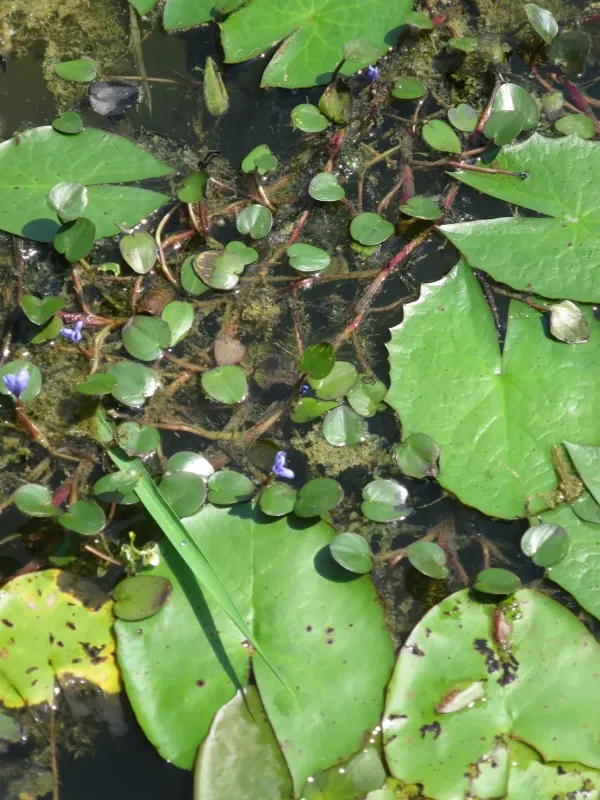
Description
Growing requirements
Floating pontederia (Pontederia natans) is a unique aquatic plant species belonging to the Pontederiaceae family. Native to tropical wetlands, this plant is well-adapted to slow-moving or stagnant water bodies where it thrives in warm, nutrient-rich environments.
Botanically, the plant is characterized by its distinct floating leaves and a flexible root system. While it can often be found drifting, it performs best when anchored in organic-rich substrates that provide essential nutrients for its rapid vegetative development.
The climate requirements for Pontederia natans are strictly tropical. It demands water temperatures ranging between 22°C and 28°C to maintain vigorous growth. Temperatures dropping below 18°C significantly hinder physiological processes and may lead to plant dormancy or senescence.
Light intensity is another critical factor. The species prefers bright, indirect sunlight. In indoor setups, full-spectrum LED lighting is recommended to mimic natural tropical conditions and ensure the healthy pigmentation of the leaves.
In terms of horticulture, this plant is valued for its ability to stabilize water ecosystems and provide shelter for aquatic organisms. It serves as a natural purifier, effectively absorbing excess minerals and helping to maintain water clarity in ornamental ponds.
Main diseases and pests
The primary threats to Pontederia natans include epiphytic algae blooms. These algae compete for light and nutrients, often smothering the floating leaves and causing the plant to starve due to lack of photosynthesis.
Fungal pathogens represent a significant risk, especially in low-flow environments where organic decay accumulates around the roots. This can lead to root rot, which is often fatal if not identified early.
Mechanical damage from aquatic snails is a common concern in closed garden systems. Snail infestations can strip the leaf epidermis, leading to secondary bacterial infections that rapidly destroy the foliage.
Nutrient deficiency, particularly a lack of iron or manganese, manifests as yellowing or chlorosis of the leaves, weakening the plant's structural integrity and making it more susceptible to environmental stress.
Water quality fluctuations, specifically drastic changes in pH or chemical hardness, can shock the root system, causing the plant to shed leaves as a survival mechanism before eventually failing to recover.