
Pickerelweed
Pontederia cyanea
Description
Growing requirements
Pickerelweed (Pontederia cordata, including synonyms such as Pontederia cyanea) is a perennial aquatic plant belonging to the Pontederiaceae family. It is widely recognized as a staple of ornamental water gardening, specifically suited for marginal zones of ponds and water features.
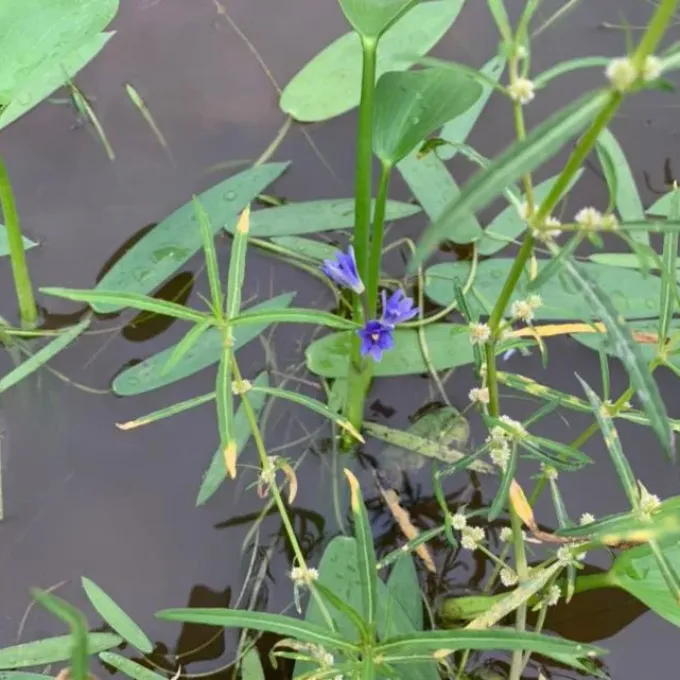
Native to the Americas, this species thrives in shallow freshwaters, marshes, and pond edges. Botanically, it is distinguished by its glossy, cordate (heart-shaped) leaves and spikes of small, vivid blue flowers that emerge during the summer months to attract pollinators.
Agricultural requirements for cultivation involve placing the plant in a heavy, nutrient-rich soil medium. It prefers water depths ranging from 5 to 20 centimeters. For optimal performance, the plants should be positioned in a location that receives full sun to partial shade.
The climate requirements dictate that while the plant is hardy in many temperate zones, it must be protected from extreme freezing in colder climates. In domestic cultivation, water level stability is crucial to ensure the plant does not dry out during the peak growing season.
In terms of хозяйственное usage, pickerelweed serves an essential ecological function. It acts as an effective biological filter, absorbing nutrients and pollutants from the water column, which significantly contributes to water clarity and the prevention of excessive algal blooms.
Main diseases and pests
The primary threats to the health of the plant involve stagnant water conditions that lack proper circulation. While hardy, the plant can be susceptible to root rot if the substrate becomes overly compacted or if the water becomes too anaerobic.
Pests are rarely a major issue, but spider mites or aphids may appear during prolonged heatwaves. Management of such pests should prioritize physical removal or non-toxic soaps to maintain the integrity of the aquatic ecosystem.