
Platycerium superbum
Platycerium superbum de Jonch. & Hennipman
Description
Growing requirements
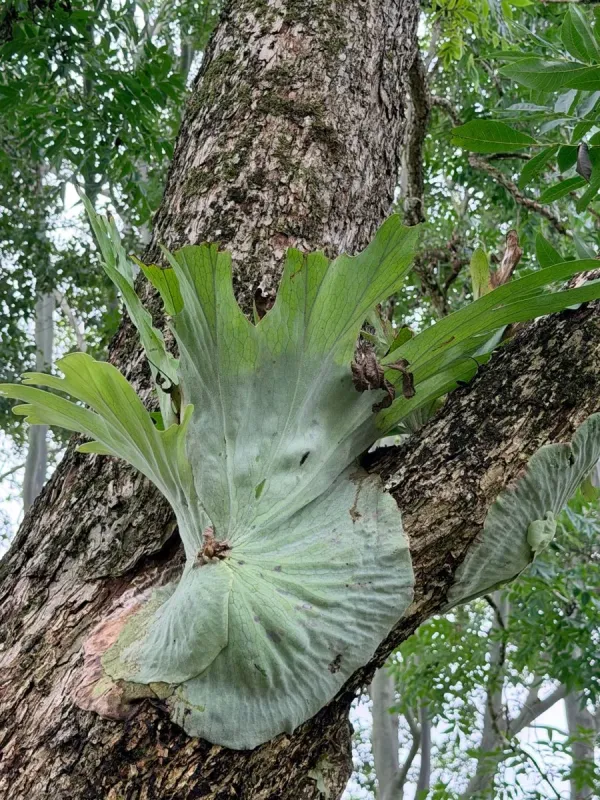
Platycerium superbum is a prominent epiphytic fern member of the Polypodiaceae family. It is native to the tropical rainforests of Australia, where it naturally anchors itself onto tree trunks and branches, acting as an atmospheric epiphyte that collects nutrients from organic debris falling into its fronds.
This species is biologically distinct due to its dimorphic fronds: sterile base fronds, which form a protective nest around the root system, and fertile fronds, which grow in a large, bifurcated shape resembling the antlers of an elk or stag. In commercial cultivation, it requires bright, indirect light to thrive.
Cultivation standards mandate a strictly controlled environment with high relative humidity, ideally between 60% and 80%. Temperatures should remain constant throughout the year, avoiding drops below 15 degrees Celsius, as the plant is susceptible to thermal stress that can halt growth.
The substrate must be highly specialized, consisting of an airy mix of pine bark, sphagnum moss, and charcoal. Because the plant is an epiphyte, standard potting soil is entirely unsuitable and will lead to rapid root suffocation. Good airflow around the root zone is the primary requirement for healthy development.
Watering is best managed via the immersion method, allowing the root mass to absorb moisture without becoming waterlogged. During the growing season, a balanced fertilizer designed for bromeliads or orchids can be applied in very diluted form to supplement the plant's nutritional requirements.
Main diseases and pests
The main pests that compromise the health of Platycerium superbum are scale insects and mealybugs. These pests frequently hide between the layers of the base fronds, making them difficult to detect. Prompt treatment with horticultural oil or mild insecticides is necessary to prevent widespread infestation.
Fungal infections, specifically crown rot and root rot, are the most frequent causes of plant death in agricultural settings. These are almost exclusively linked to poor drainage and inadequate ventilation, which allow pathogens to colonize the moist, organic-rich debris trapped within the sterile fronds.