
Staghorn fern
Platycerium bifurcatum (Cav.) C. Chr.
Description
Growing requirements
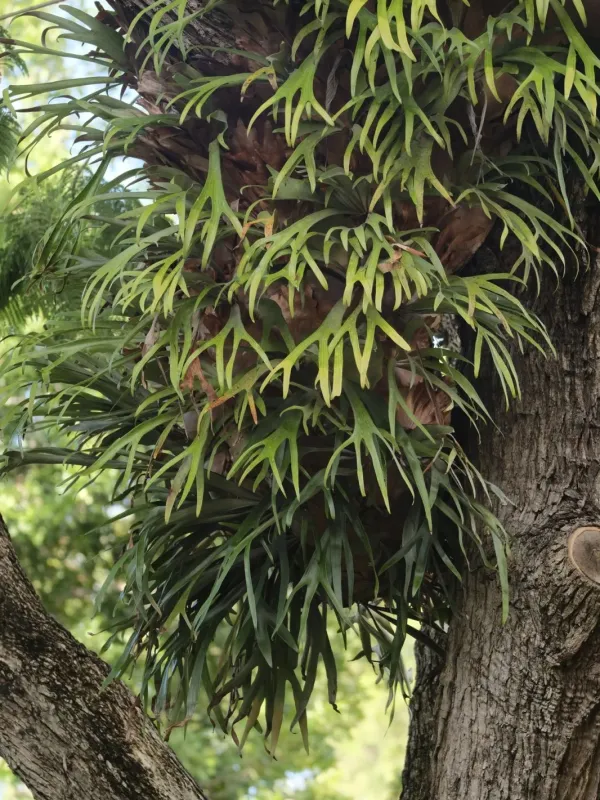
Platycerium bifurcatum, commonly known as the staghorn fern, belongs to the Polypodiaceae family. It is a distinctive epiphytic fern that naturally grows on tree trunks and branches in the tropical rainforests of Australia and Southeast Asia.
The plant features two distinct types of fronds: the basal or shield fronds, which protect the roots and gather organic matter, and the fertile, antler-like fronds that produce spores for reproduction. This dimorphism is a hallmark of the species.
Agronomically, the plant requires a highly porous medium that mimics its natural environment. A mix containing orchid bark, sphagnum moss, and charcoal is ideal to ensure proper air exchange and prevent root suffocation in closed environments.
Temperature management is critical for this species. It thrives in temperatures between 20°C and 25°C. Exposure to temperatures below 10°C can result in severe cellular damage, while excessive heat without humidity control may cause the fronds to dry out rapidly.
Regarding moisture, this fern requires high relative humidity levels, ideally maintained between 60% and 80%. Watering is best performed by soaking the growing medium, allowing it to absorb moisture without becoming waterlogged, which is vital for preventing metabolic issues.
Main diseases and pests
Common pests affecting Platycerium bifurcatum include scale insects and mealybugs. These sap-sucking pests often settle under the shield fronds, making them difficult to detect until a significant infestation occurs, which can weaken the plant.
Root rot, driven by overwatering or poor drainage, is the primary pathological threat. The condition manifests as black, mushy spots at the base of the plant, often accompanied by a distinct smell of decay in the growing substrate.
Fungal infections, such as Rhizoctonia, can occur when the environment is both cool and stagnant. These infections cause necrotic patches on the fronds, which quickly expand if the ventilation is not improved immediately.
Spider mites are another concern, particularly in indoor environments with low humidity. They leave fine webbing and cause the fronds to lose their characteristic dark green color, eventually leading to chlorosis and tissue necrosis.
Integrated pest management should prioritize cultural controls, such as maintaining optimal airflow and humidity. If chemical intervention is necessary, soaps or oils are generally safer for the fern's sensitive foliage than harsh broad-spectrum insecticides.