
White cutgrass
Leersia virginica
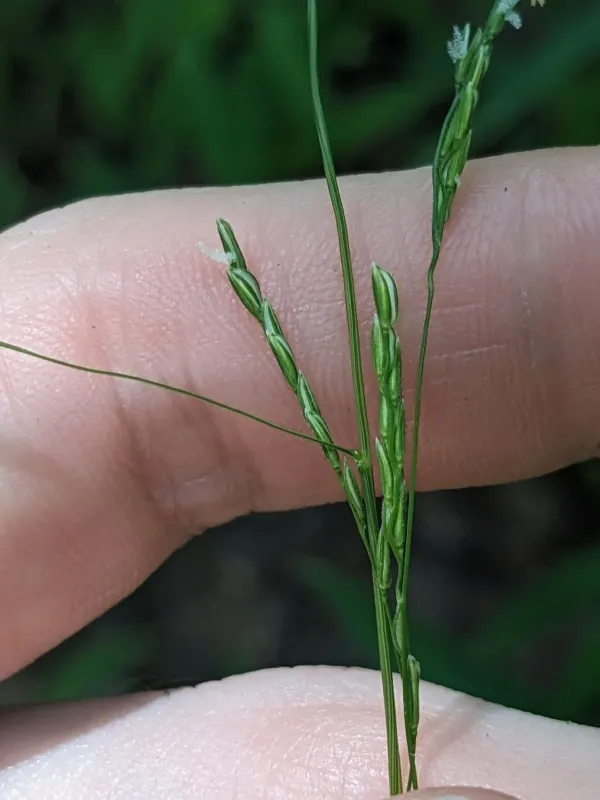
Description
Growing requirements
White cutgrass (Leersia virginica) is a perennial grass species belonging to the Poaceae family. It is native to North America, where it thrives in moist to wet habitats such as floodplains, stream banks, and shaded forest wetlands.
The plant is biologically characterized by a creeping rhizomatous growth habit, which allows it to form dense stands. Its stems are relatively slender, and the leaf blades possess fine, often scabrous edges, which is a signature feature of the genus Leersia.
Regarding cultivation requirements, Leersia virginica prefers soils with consistently high moisture levels. It is an excellent candidate for stabilizing riparian buffers and moist soil environments that are often unsuitable for conventional agricultural crops.
In terms of climatic adaptability, this grass is well-suited to temperate zones. It handles shade significantly better than many other forage grasses, making it a valuable component in agroforestry systems or areas with limited sunlight exposure.
Proper management involves maintaining the soil water table to prevent desiccation. The plant's deep and spreading root system ensures it remains anchored even during temporary flooding events, providing significant ecological service in erosion control.
Main diseases and pests
The most common threats to Leersia virginica include various fungal pathogens that thrive in high-humidity environments. Leaf rust and powdery mildew can occasionally reduce the photosynthetic efficiency of the stands if the canopy becomes too dense.
Insect pests, such as aphids and various grass-feeding larvae, can impact the crop. However, in its natural habitat, the plant often maintains a balance with local beneficial insects, minimizing the need for chemical intervention.
Competition from invasive plant species is a major concern during the establishment phase. Weeds can easily outcompete young seedlings, necessitating careful site preparation and weed management during the first year of growth.
Drought is a primary physiological threat to the plant. Because it is highly adapted to wet conditions, a lack of surface or groundwater will lead to rapid senescence, reducing biomass production and overall plant vigor.
Soil nutrient imbalances or extreme pH levels can inhibit the plant's ability to compete. While it is tolerant of wet soils, poor nutrient management can lead to yellowing of foliage and increased susceptibility to secondary infections by pathogens.