
Blunt wheatgrass
Thinopyrum obtusiflorum
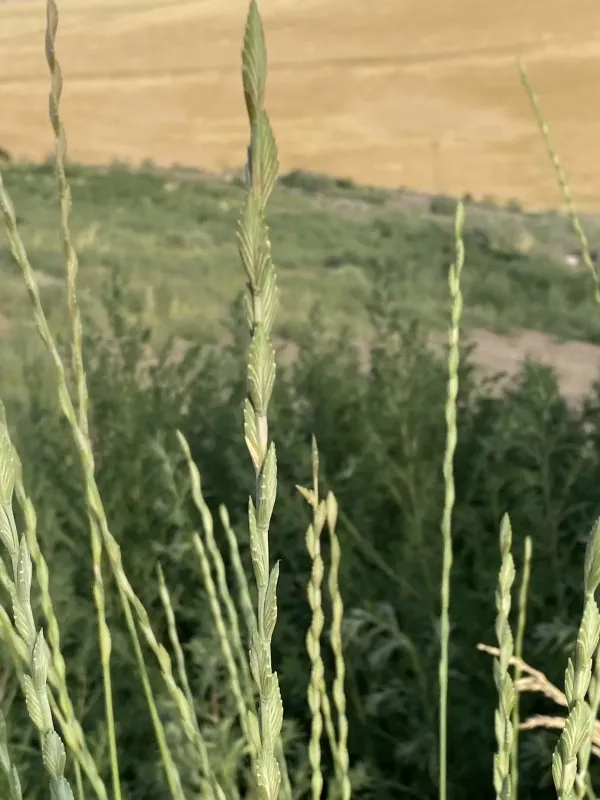
Description
Sowing dates
Blunt wheatgrass (Thinopyrum obtusiflorum) is a perennial grass belonging to the Poaceae family, widely recognized for its robust growth habit and significant environmental adaptability. It is highly valued in forage production for its ability to maintain yields under diverse ecological conditions.
Sowing typically occurs in early spring or autumn, depending on the climatic zone. Proper seedbed preparation is essential; the soil should be fine-textured and firm to ensure optimal seed-to-soil contact, which promotes uniform germination and establishment.
The seeds are sown at a shallow depth of 2–3 cm. Given that initial development is relatively slow, weed control during the seedling stage is critical to prevent competition for light and moisture, ensuring the grass becomes well-established.
The choice of sowing method—either drilling or broadcasting—depends on the specific usage of the site. Row seeding is often preferred for seed multiplication plots to facilitate inter-row maintenance and reduce weed incidence.
Adequate soil moisture at the time of sowing is vital for success. If moisture levels are marginal, light rolling after planting can enhance soil structure and improve the chances of early survival for the developing seedlings.
Growing requirements
This species thrives in a variety of soil types, ranging from sandy loams to heavy clays. A defining characteristic of Blunt wheatgrass is its tolerance to soil salinity, making it an excellent candidate for reclaiming degraded and saline-prone agricultural land.
The plant is highly drought-tolerant, owing to its deep and extensive root system. This allows it to remain productive during long, hot summers where other cool-season grasses might fail or enter dormancy prematurely.
Blunt wheatgrass prefers open, sunny locations. While it is tolerant of various soil pH levels, it performs best in neutral to slightly alkaline environments with good drainage, preventing the risk of root-zone waterlogging during the spring.
Nutrient requirements should be met through balanced fertilization. Nitrogen application during the active growth phase significantly improves biomass yields, while phosphorus and potassium are essential for long-term root health and persistence.
The species exhibits a strong ability to withstand cold winters, making it a reliable choice for temperate climates. Its hardiness ensures that the stand remains viable for several years without the need for frequent renewal.
Yield
Yields of Blunt wheatgrass are highly dependable, providing significant forage biomass throughout the growing season. Its persistent nature makes it a cost-effective choice for long-term pasture or hay meadow management.
The nutritional value of the foliage is high when harvested at the right stage, making it an excellent feed source for livestock, including cattle and sheep. Its palatability remains good, which is a significant factor in promoting weight gain in grazing animals.
When used for seed production, management focus shifts to minimizing seed shatter. Proper field spacing and controlled nutrient management can significantly enhance the quantity and quality of the harvested seed crop.
In grazing scenarios, the grass is noted for its rapid regrowth after defoliation. This resilience allows for rotational grazing systems that ensure a constant supply of green forage from spring through early autumn.
Economic sustainability is further improved by the longevity of the stands. Once established, these pastures require minimal maintenance, reducing the operational costs associated with land preparation and reseeding.
Main diseases and pests
Blunt wheatgrass is generally resistant to many common grass pathogens. However, in regions with high humidity, there is a risk of fungal infections such as rust or powdery mildew, which can affect the leaves and reduce biomass quality.
Insect pests, such as aphids or stem-boring flies, may occasionally cause damage to the vegetation or reproductive organs. Regular scouting and monitoring of fields are necessary to determine if control interventions are needed.
Poor drainage or physical damage to the field can lead to soil compaction, which hinders root growth and encourages secondary disease outbreaks. Protecting the root zone is key to preventing plant mortality.
- Stem rust (Puccinia graminis)
- Cereal aphids (Aphididae)
- Grass moths (Crambidae)
Good agricultural practices, such as maintaining appropriate grazing intensity and balanced fertilization, are the most effective preventive measures against threats. Healthy, well-nourished plants show much stronger resistance to biotic stressors.
Harvesting
The ideal time for hay harvest is during the early heading stage, before the grass reaches full maturity and stem lignification becomes excessive. Harvesting at this stage ensures the best balance of energy, protein, and digestibility.
Mechanical harvesting using forage mowers with conditioning capabilities helps speed up the drying process. Reducing the time the mown grass spends in the field preserves its nutritional content, particularly vitamins and carotene.
For seed harvest, timing is crucial. The seed should be gathered when the grain moisture level drops to a safe threshold, yet before the seeds start to shatter naturally due to wind or mechanical disturbance.
Post-harvest storage requires moisture control. Drying the grain down to 12–14% moisture is standard procedure to ensure long-term viability and prevent fungal growth during warehouse storage.
Maintaining a sufficient stubble height after cutting is essential for the plant’s regrowth potential. Leaving 6–8 cm of stubble allows the plants to retain the necessary energy reserves to initiate quick recovery for subsequent cuts.