
Sand couch grass
Thinopyrum junceiforme
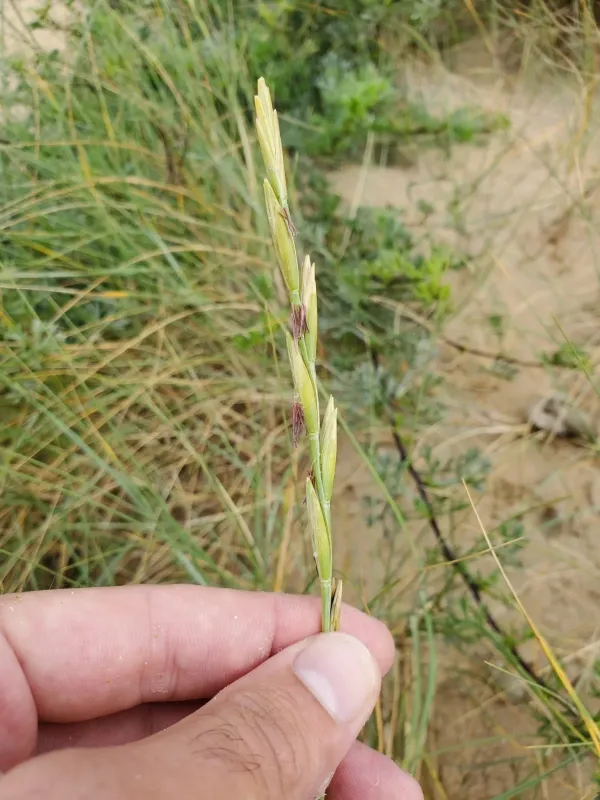
Description
Sowing dates
Sowing of sand couch grass is typically scheduled for periods with optimal soil moisture, usually in early spring or the second half of autumn. Using high-quality seeds with high germination energy is critical for achieving uniform emergence in the challenging conditions of sandy substrates.
The seeding method is chosen depending on the goal of the site, whether it is dune restoration or the creation of protective buffers. Seeds are planted at a shallow depth, as small seeds require close contact with a moist soil layer for successful rooting.
To accelerate the soil stabilization process, overseeding into existing plant micro-communities or hydroseeding technologies is often practiced. It is important to protect young sprouts from wind erosion in the first few weeks after emergence.
In industrial cultivation for forage purposes, the seeding rate is adjusted based on weed pressure and groundwater depth. In arid regions, sowing is carried out with mandatory soil rolling.
The crop has a high capacity for vegetative reproduction, so when creating perennial plantings, the subsequent spreading of rhizomes is taken into account. This allows the plant to independently fill open spaces, forming a dense turf cover.
Growing requirements
Sand couch grass, belonging to the Poaceae family, is a halophyte adapted to life in the extreme conditions of saline and sandy soils. Its natural range covers the coasts of Europe, where the plant acts as a pioneer in dune colonization.
The plant demonstrates exceptional resistance to high soil salinity and the impact of sea spray. It is able to withstand prolonged exposure to strong winds, which are destructive to other agricultural crops.
Optimal development conditions include well-drained, loose sandy soils with low humus content. Sand couch grass effectively utilizes available moisture even with deep groundwater levels due to its developed rhizome system.
The crop requires open, well-lit areas, as it poorly tolerates shading from woody and shrub vegetation. Climatically, the plant is adapted to temperate latitudes, enduring both winter frosts and summer temperature fluctuations.
An important success factor is the absence of water stagnation, as waterlogging leads to the suppression of the root system. In terms of agronomy, it is preferable to choose sites with natural drainage.
Yield
The productivity of sand couch grass is measured not so much by the volume of green mass, but by its ability to form a dense turf. In phytoremediation, yield is measured by the area of successfully stabilized erosion-prone territories.
As a pasture crop, it provides a stable amount of biomass in conditions unsuitable for growing traditional grasses. The plant regrows well after moderate grazing by livestock.
The nutritional value of couch grass in the tillering phase is quite high, allowing it to be used as an additional source of fodder for sheep and cattle in coastal regions. However, as it matures, the stiffness of the stems increases significantly.
Seed yield depends on the meteorological conditions of the current season and the degree of soil salinity. Harvesting seed material requires specialized equipment due to the fragility of the spikes at full maturity.
The intensity of mass accumulation depends on the level of nitrogen nutrition; however, the crop adapts perfectly to poor soils, maintaining the biological stability of the community.
Main diseases and pests
The main threats to sand couch grass are related to human impact, such as dune trampling and excessive recreational use. Mechanical damage to the turf opens the way for wind erosion.
Among cereal diseases, various types of rust and smut may occur, especially in seasons with high air humidity. However, the species' high resistance to typical pathogens makes it a reliable choice for ecological projects.
Pests that affect wild grasses, such as cereal beetles or aphids, can cause localized damage to crops. Nevertheless, mass outbreaks of pests on this culture are rarely recorded.
Competition from invasive plant species is a significant threat, as sand couch grass is a weak competitor in conditions with high densities of other grasses. Monitoring is necessary to prevent the site from becoming overgrown with weeds.
In some cases, rodents can damage rhizomes in winter, slowing down the spring regrowth of the crop in certain areas.
Harvesting
Harvesting of green mass is carried out in the heading phase to preserve maximum forage nutrition. When used for reclamation purposes, mowing is usually not required, except for maintaining the aesthetic appearance of the site.
Seed collection is carried out during the full waxy ripeness phase, when the caryopses acquire a characteristic straw color. It is important to harvest in dry weather to prevent seed spoilage during storage.
When using seed drills for land restoration, it is necessary to ensure the correct cleaning of seeds from plant residues. Storage of seed material is carried out in cool, dry rooms protected from moisture.
To prevent losses during seed collection, combines with minimal threshing drum revolutions are used. The uniformity of spike ripening allows harvesting in a single pass.
In the case of establishing seed production plots, it is recommended to leave a portion of the area for natural reseeding, which supports population density in the long term.