
Rattlesnake mannagrass
Glyceria canadensis
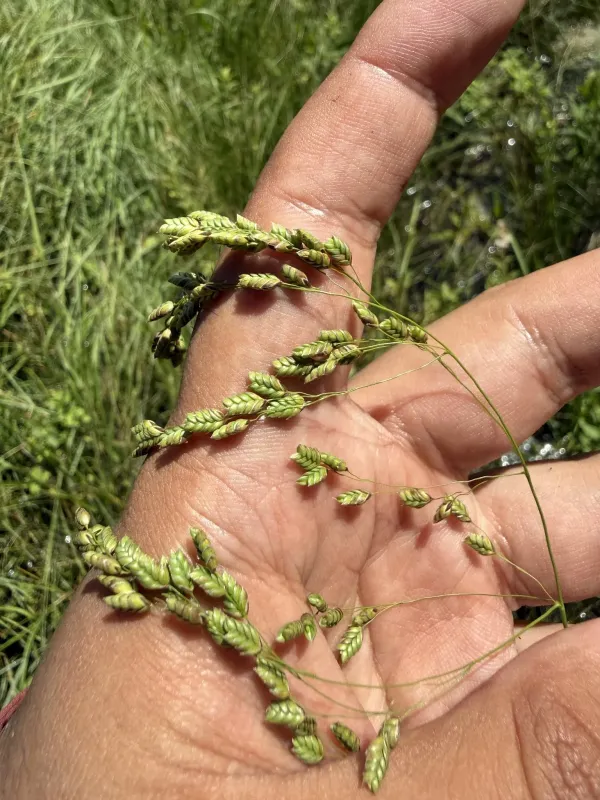
Description
Growing requirements
Rattlesnake mannagrass (Glyceria canadensis) is a perennial grass species within the Poaceae family. It is distinctively known for its affinity for wetland environments, ranging from swamps to wet meadows.
Native to North America, this plant is well-adapted to cool, temperate climates. It occupies a critical ecological niche, providing structural diversity and biomass in areas that are frequently waterlogged.
The plant features upright stems that can grow up to 1.2 meters tall. Its inflorescence is a loose, nodding panicle that gives the plant a characteristic appearance, often resembling a rattlesnake tail, which explains its common English name.
Regarding soil requirements, it thrives in wet, nutrient-rich substrates. It has high tolerance for periodic flooding, making it a viable candidate for ecological restoration projects or specialized forage production on marshy lands.
In terms of agricultural utility, it serves as a robust source of forage. By occupying marginal, wet land, it helps farmers maximize the productivity of areas that are otherwise difficult to manage with conventional equipment.
Main diseases and pests
As a specialized wetland species, rattlesnake mannagrass maintains a robust natural resistance to many common cereal diseases. Its physiology is optimized for high-moisture conditions, which suppresses many soil-borne fungal pathogens.
Major threats to the crop include long-term habitat alteration. Draining the land completely can cause the population to decline, as it competes poorly with upland grass species once the substrate becomes dry.
Pests that target wetland vegetation may occasionaly feed on its leaves, but severe infestations are rare. The plant is usually capable of recovering rapidly due to its deep and resilient rhizomatous root system.
Fungal issues, such as leaf spots, may appear under suboptimal conditions, particularly if air circulation is poor or if the plant suffers from sudden water chemistry shifts. However, these are rarely fatal to the stand.
Effective management includes monitoring the water table depth and avoiding excessive grazing during the early stages of the growing season. Protecting the moisture integrity of the site is the primary defense against pests and diseases.