
Common reed
Phragmites australis (Cav.) Trin. ex Steud.
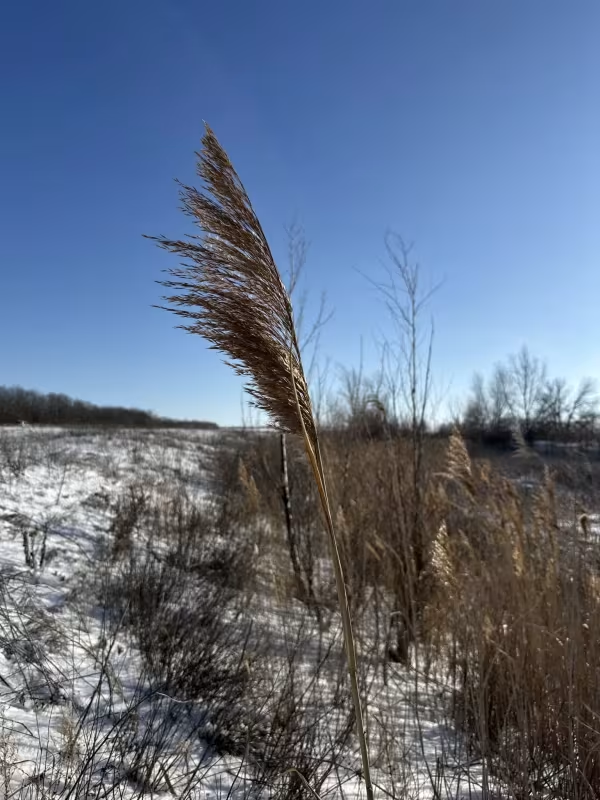
Description
Growing requirements
Common reed Phragmites australis is a robust perennial grass species belonging to the Poaceae family. It is widely distributed across temperate and tropical regions, thriving in aquatic and semi-aquatic habitats.
This species is characterized by its extensive rhizomatous system, allowing it to form dense stands that play a crucial role in carbon sequestration and water purification within wetland ecosystems.
Environmental requirements for optimal growth include access to fresh or brackish water and high solar radiation. It is highly tolerant of varying soil pH levels and is notably resistant to salinity, which makes it suitable for rehabilitating degraded land.
In managed agricultural systems, the density of reed stands is controlled to maximize biomass yield per hectare, ensuring high cellulose content for industrial applications in construction and paper manufacturing.
As a source of renewable energy, common reed is increasingly utilized for biogas production and high-density fuel pellets, providing an efficient alternative to fossil fuels in local energy circuits.
Main diseases and pests
The plant is susceptible to several fungal infections, including Puccinia phragmitis, which can compromise the structural integrity of the culms and reduce biomass quality.
Pest pressure from stem-boring insects can lead to stunted growth and increased susceptibility to secondary infections during the active growing season.
Harvesting
Harvesting operations are primarily conducted in winter, taking advantage of the low moisture content in mature stems to facilitate efficient storage and transport for industrial use.