
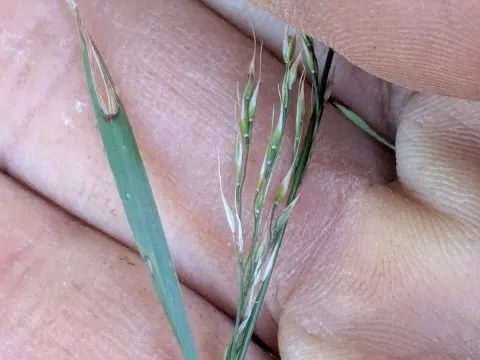
Oloptum
Oloptum
Oloptum belongs to perennial grasses, meaning sowing dates are highly dependent on the local climate and moisture availability in the field.
What the section contains

Oloptum
The optimal period for sowing is early spring as soon as the soil reaches physiologically active temperatures for seed germination.
Late autumn sowing is also permitted in regions with mild winters, allowing seeds to undergo natural stratification and emerge uniformly.
The seeding rate must consider the high germination energy of the seeds and the required stand density to prevent weed infestation.
It is essential to ensure good seed-to-soil contact during sowing, which is achieved by rolling the field immediately after seeding.
This culture is distinguished by exceptional ecological plasticity and high resistance to extreme environmental conditions.
Oloptum prefers chestnut and chernozem soils but successfully grows on saline and rocky grounds where other grasses fail to thrive.
Light availability is a key factor for successful development, as the plant is photophilous and tolerates poor shading poorly within stands.
The plant possesses a well-developed root system, enabling effective moisture uptake from deeper soil layers during prolonged droughts.
A critical requirement is the absence of waterlogging, as the crop does not tolerate excessive moisture or inundation of the crown area.
The green mass yield of Oloptum directly depends on the level of agronomic management and the moisture regime during the growing season.
Under irrigation or favorable precipitation conditions, the crop is capable of producing up to two full cuts per season.
Average dry matter productivity ranges from 1.5 to 3.5 tons per hectare, depending on the specific soil type and fertility.
When grown for seed, yields can reach significant levels with timely application of nitrogen fertilizers during the active growth phase.
The duration of productive stand use is at least 5 to 7 years in the same location, provided that proper exploitation rules are followed.
Common diseases affecting this crop include rust fungi, which can damage the foliage during periods of high humidity and rainfall.
Powdery mildew also appears in dense stands where air circulation is poor, potentially affecting the overall plant health.
Among pests, grain bugs pose the greatest threat as they damage generative organs and significantly reduce seed production capacity.
Wireworm larvae may cause damage to young seedlings, making pre-sowing seed treatment with appropriate insecticides a vital protective measure.
To prevent the spread of pathogens, it is recommended to implement crop rotation and perform timely mowing of the vegetative mass.
Hay harvesting should be performed at the heading phase when the plant accumulates maximum nutrients and maintains high leafiness.
It is crucial to avoid over-maturation of the stand, as stems become woody and their nutritional value drops significantly as they age.
For seed harvesting, swathing is recommended, waiting for the spikes to turn brown to minimize seed shattering losses during the process.
Using mower-conditioners for hay preparation accelerates drying, helping to preserve more vitamins and protein in the final product.
The harvested yield requires mandatory post-harvest processing, including cleaning and drying to reach standard moisture content for storage.