
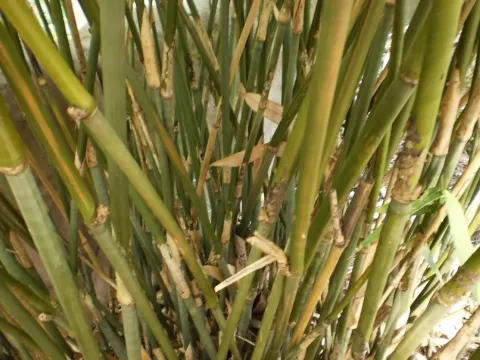
Ochlandra
Ochlandra
Ochlandra is a genus of perennial woody plants belonging to the family Poaceae, subfamily Bambusoideae. This bamboo species is primarily native to the tropical regions of India and Sri Lanka, where it thrives in high-rainfall environments, often forming dense thickets along riverbanks and in swampy areas.
What the section contains


Ochlandra
Botanically, Ochlandra species are characterized by their clump-forming habit and vigorous rhizome systems. The culms (stems) are relatively thin but possess remarkable tensile strength, which makes them highly suitable for various industrial and artisanal applications.
The climate requirements for Ochlandra are strict: it demands tropical, humid conditions with stable temperatures. It is highly intolerant to frost, and even moderate cold snaps can severely damage the plant's vegetative parts, hindering its growth cycle and biomass production.
Regarding soil requirements, these plants prefer fertile, well-drained loamy soils. However, they demonstrate high plasticity and can adapt to varied soil textures as long as moisture levels remain high. Soil pH should ideally be neutral to slightly acidic to optimize nutrient uptake.
Agrotechnical management requires consistent moisture. In areas with a pronounced dry season, irrigation is necessary to maintain productivity. Without sufficient water, the culm growth slows significantly, reducing the harvest potential for the upcoming season.
The primary industrial use of Ochlandra is in the pulp and paper industry. Its fibers are highly valued for their length and strength, making them an excellent raw material for producing high-quality paper, cardboard, and various packaging materials.
Beyond pulp production, Ochlandra is a staple in local cottage industries. The stems are extensively used to weave baskets, mats, and agricultural implements. Its flexibility and durability make it a preferred material for traditional craftsmanship in its native regions.
Young shoots of some Ochlandra species are edible and serve as a source of nutrition for local populations. They are typically harvested, processed, and boiled to remove natural bitter compounds before being consumed in various traditional culinary dishes.
The yield of Ochlandra is remarkably high compared to many other perennial crops. By employing sustainable harvesting practices—such as selective thinning—producers can ensure the long-term vitality of the bamboo grove while achieving consistent annual outputs.
The plant's ability to regenerate rapidly from rhizomes allows for sustained biomass extraction. This makes Ochlandra a highly efficient crop for renewable resource management in tropical agricultural systems.
Fungal diseases represent a major threat to Ochlandra plantations, especially in regions with high humidity and poor air circulation. Pathogens can infect the culms, leading to discoloration and a significant reduction in the quality of the fiber for paper production.
Pests such as bamboo borers and various coleopteran species cause structural damage by boring into the internodes of the stems. This physical damage reduces the overall harvest quality and can weaken the structural integrity of the plant, leading to stunted growth.
Rodents and other small herbivores often target young, succulent shoots, which can destroy new growth and prevent the expansion of the plantation. Protecting young groves is essential for successful establishment and future yield stability.
Mechanical damage during harvesting, if not managed correctly, facilitates the entry of pathogens into the plant's vascular system. Implementing hygienic harvesting techniques and sterilizing tools are critical steps in maintaining the health of the bamboo grove.
- Routine phytosanitary inspection of the plantation.
- Removal and proper disposal of diseased or dead stems.
- Implementing strategic spacing to improve airflow and reduce humidity traps.