
Orcuttia californica
Orcuttia californica
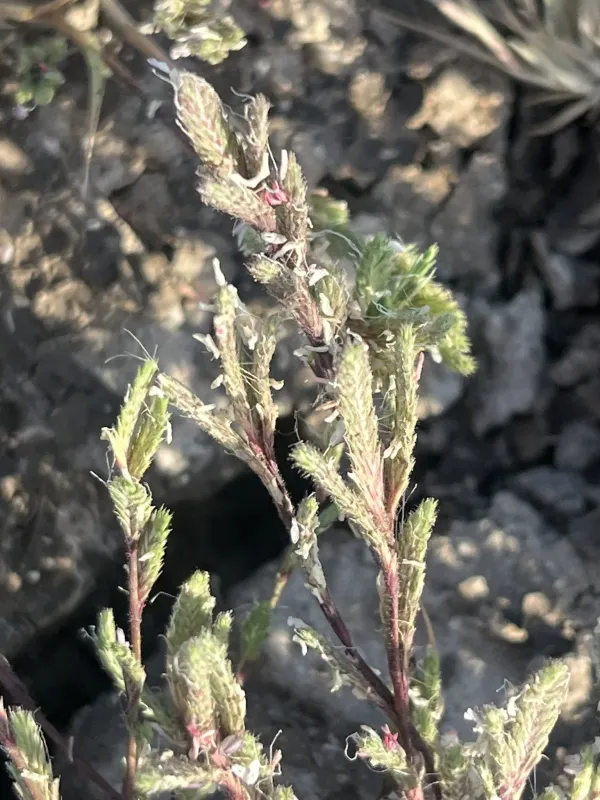
Description
Growing requirements
Orcuttia californica, commonly known as California Orcutt grass, is a rare annual grass species belonging to the Poaceae family. It is a highly specialized plant adapted to vernal pools, which are seasonal wetlands that undergo a cycle of flooding and drying.
The life cycle of this plant is strictly dependent on the hydrology of its environment. Seeds require an initial period of inundation to germinate, while the subsequent dry phase is necessary for the plant to flower, set seed, and complete its development.
These plants typically grow on clay-rich soils that possess a subsurface layer impermeable to water. This creates a basin that traps rainwater during the wet season, providing the exact moisture levels required by the species for survival.
The climatic conditions ideal for Orcuttia californica are characterized by a Mediterranean climate with mild, wet winters followed by long, hot, and dry summers. The plant is extremely sensitive to shifts in the timing and volume of seasonal precipitation.
While often categorized in botanical databases, it is important to note that this is not an agricultural crop. It has no commercial use in farming and is currently protected under endangered species legislation, making any form of cultivation illegal and ecologically harmful.
Main diseases and pests
The primary threat to the survival of Orcuttia californica is the destruction of its vernal pool habitat. Urban development and land conversion for industrial or agricultural purposes are the main drivers of its decline.
Invasive weed species pose a significant threat by outcompeting the native grass for resources. Because Orcuttia californica is adapted to a very specific niche, it is easily displaced by more aggressive, non-native vegetation.
Hydrological alteration, such as the construction of drainage ditches, dams, or urban paving, prevents the natural accumulation of water in vernal pools. Without the flooding cycle, the seeds cannot germinate and the population collapses.
Livestock grazing and off-road vehicle usage in pool beds cause severe soil compaction and physical destruction of the dormant seed bank. This mechanical disruption prevents the natural regeneration of the species.
Pollution from agricultural runoff, including nitrogen and phosphorus, alters the nutrient balance of the pools. This promotes the growth of undesired algae and weeds that can smother the fragile sprouts of the California Orcutt grass.