
Loudetia annua
Loudetia annua
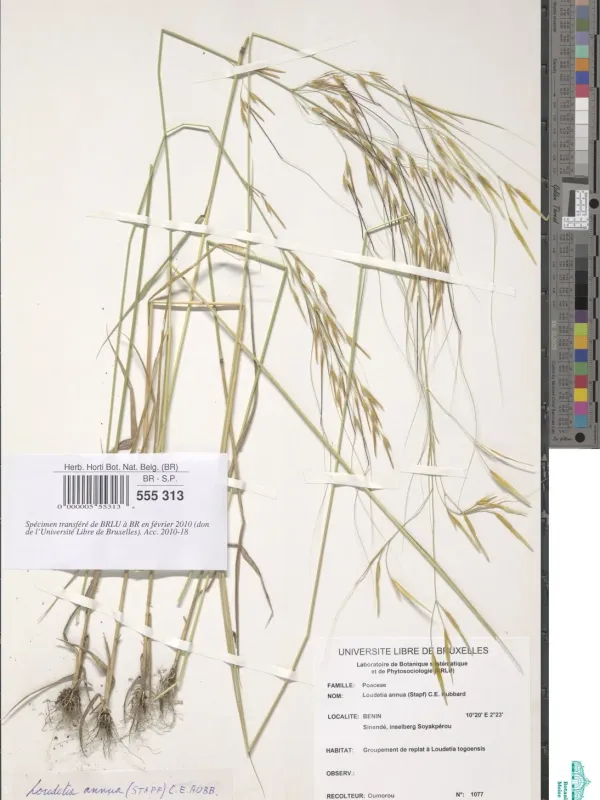
Description
Growing requirements
Loudetia annua is a grass species belonging to the Poaceae family, widely recognized for its adaptation to seasonal climates in tropical Africa.
The plant thrives in well-drained soils, often preferring sandy or gravelly textures that provide necessary aeration for its root system.
Regarding climate, this species is highly heat-tolerant and requires substantial sunlight to reach its full vegetative potential during the growing season.
Soil nutrient requirements are relatively low, making it a robust crop that can colonize soils with limited fertility where more demanding crops would fail.
Proper water management is essential; although it is drought-tolerant, it requires sufficient moisture during the initial germination phase to establish a strong crop density.
Main diseases and pests
Like many wild grass relatives, Loudetia annua is susceptible to standard cereal diseases if grown under monoculture conditions with high humidity.
Pest pressure from grasshoppers and various sap-sucking insects can impact biomass production, though the plant typically maintains resilience against these pressures.
Fire is a critical ecological factor; while the species is adapted to survive periodic burning, uncontrolled high-frequency fires may affect its seed bank viability.
Competition from invasive plant species poses a threat in degraded lands, potentially suppressing the growth of Loudetia annua in mixed grassland settings.
Managing the health of the crop involves monitoring for fungal outbreaks and preventing mechanical damage to the stems during the flowering stage.