
Loudetia flavida
Loudetia flavida
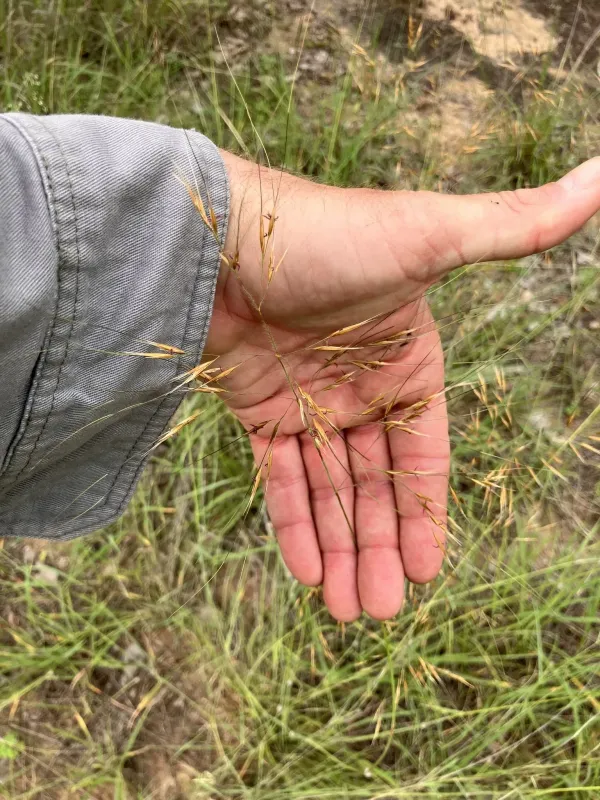
Description
Growing requirements
Loudetia flavida is a perennial grass species belonging to the Poaceae family. It is native to tropical and subtropical regions, primarily found across the African savanna landscapes where it thrives in open areas.
The plant is known for its remarkable adaptability to poor soil conditions. It typically grows on well-drained, sandy, or stony substrates that are low in nutrients, where it establishes deep roots to survive periods of nutritional stress.
Climatic requirements are centered around high temperatures and distinct wet seasons. Loudetia flavida is highly drought-tolerant, making it an essential component of the vegetation in environments prone to chronic water scarcity.
Botanically, it forms loose tufts with slender culms. The inflorescence is a panicle characterized by its distinctive yellowish to golden hue, which serves as a key identification feature for the species in the wild.
The main agricultural application is as fodder for livestock. While it is not as nutrient-dense as cultivated forage crops, its ability to provide ground cover and sustain cattle in degraded environments makes it valuable for extensive pastoral systems.
Harvesting
Harvesting for hay is typically performed during the peak of the growth stage before the seeds harden. Controlled grazing cycles are also recommended to ensure the plant continues to produce palatable regrowth rather than becoming overly lignified.