
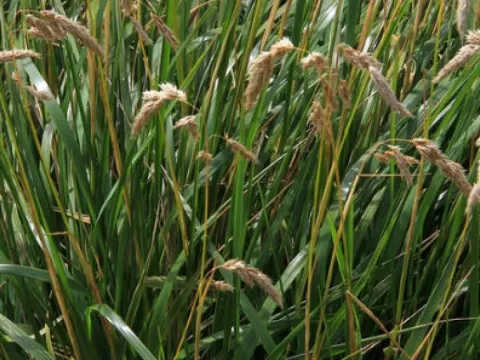
Sweet grass
Hierochloe
Propagation of sweet grass is typically achieved through vegetative division of rhizomes, which is the most reliable method for commercial establishments.
What the section contains


Sweet grass
Seed sowing is possible but presents challenges due to low germination rates, requiring cold stratification for approximately 45 days before planting.
Spring sowing should be timed to avoid late frosts, usually when the soil temperature consistently reaches at least 10–12°C for optimal seedling emergence.
Seeds should be sown very shallowly, barely covered with soil, as light is a critical factor for the successful germination of this species.
Row spacing is usually set between 30 and 40 cm to allow the creeping rhizomes enough space to expand and cover the intended planting area.
Hierochloe odorata, a member of the Poaceae family, thrives in well-drained, sandy loam soils with a neutral to slightly acidic pH level.
The plant requires full sun to partial shade; however, optimal production of fragrant coumarin compounds is achieved in sunny, open environments.
Sweet grass is highly winter-hardy and adapts well to cold climates, making it a perennial crop that returns reliably each spring.
Adequate moisture is essential throughout the growing season, particularly during the establishment phase, as the plant does not tolerate prolonged drought.
Soil fertility should be maintained through organic matter amendments, avoiding excessive synthetic nitrogen which can negatively alter the aromatic profile.
Yields of dried biomass typically range from 1.5 to 2.5 tonnes per hectare, depending on the age of the crop and the environmental conditions.
The plant reaches its peak yield capacity starting in the second or third year after establishment, maintaining high productivity for several years thereafter.
Harvesting frequency influences total annual yield, with most producers aiming for two substantial cuts per growing season without exhausting the plant.
Quality and quantity of aromatic oils are highly dependent on the timing of the harvest relative to the flowering phase of the plant development.
Post-harvest handling is critical, as improper storage can lead to a rapid loss of the signature vanilla-like scent that gives the grass its value.
Sweet grass is generally resistant to many pests, but it remains susceptible to fungal issues, particularly rust and leaf spots, in humid climates.
Weed management is the most significant agronomic challenge, as the grass grows relatively slowly and struggles to compete with vigorous weeds.
Adequate spacing and drainage are the primary preventative measures against the development of root rots and other soil-borne plant pathogens.
Insects such as aphids or grass-eating larvae may occasionally target the crop, requiring integrated pest management strategies to protect the harvest.
Maintaining a healthy, vibrant stand is the best natural defense against invasive species that could otherwise degrade the quality of the raw material.
Harvesting is ideally conducted during the full bloom stage when the plants exhibit the highest concentration of aromatic coumarin compounds.
Mechanical or manual scythes are used to cut the grass, ensuring that a stubble height of at least 10–15 cm is left for plant recovery.
Quick drying in shaded, well-ventilated areas is required to preserve the green color and intense scent, preventing the onset of mold or fermentation.
High-quality production often utilizes controlled-temperature drying facilities to ensure consistency in the chemical composition of the final product.
Storage should occur in airtight containers in a cool, dark place to maintain the integrity of the essential oils for as long as possible.