
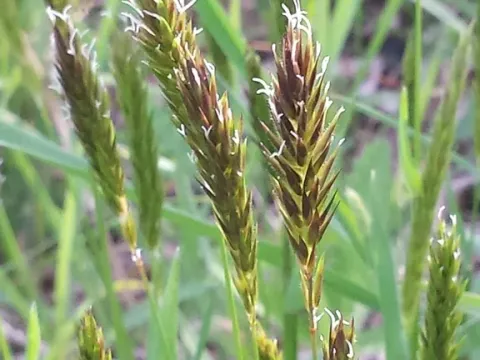
Sweet vernal grass
Anthoxanthum
Sweet vernal grass (Anthoxanthum odoratum) is a perennial grass species that is typically established through autumn or early spring sowing, depending on the climatic zone.
What the section contains


Sweet vernal grass
The seeds are small and require a finely prepared seedbed, with a shallow planting depth of approximately 1–2 centimeters to ensure successful germination and emergence.
In typical seeding programs, a sowing rate of 8–10 kg per hectare is recommended, depending on the desired density and whether the grass is being sown in a mixture.
Firming the soil with a roller after seeding is a crucial agronomic step, as it improves soil-to-seed contact and maintains capillary moisture levels essential for seedling survival.
The grass is known for its persistence and ability to re-establish itself, making it a valuable component in permanent pastures where longevity is a primary management goal.
Botanically classified within the Poaceae family, sweet vernal grass is highly adaptable and thrives in a wide range of soil types, including nutrient-poor and acidic conditions.
While it prefers moderately moist soils, the species exhibits significant drought tolerance due to its fibrous and efficient root system that maintains vitality throughout the summer.
Light availability is a critical factor for the development of its aromatic profile; full sun exposure promotes the synthesis of coumarin, which gives the grass its distinct scent.
It does not demand high fertility levels, yet it shows a positive response to nitrogen applications, which can boost its vegetative biomass production during the peak growing season.
Maintenance involves spring harrowing to remove dead organic matter, which enhances air circulation around the root zone and stimulates new growth after the winter dormancy period.
The primary agricultural value of this grass is not necessarily its total biomass yield, but rather its role in improving the palatability and scent of the harvested hay.
Coumarin content acts as a natural attractant for livestock, helping to increase the intake of hay mixtures even when the overall nutritional profile is supplemented by other grasses.
Under optimal moisture and temperature conditions, the grass can produce 2–3 cuts per year, provided the cutting management allows for sufficient regrowth intervals.
Peak productivity typically occurs during the second and third years of establishment, after which yield levels might stabilize or decrease, necessitating regular pasture renovation.
Seed production yields range from 200 to 400 kg per hectare, requiring favorable weather conditions during the flowering phase to ensure proper grain development and filling.
Anthoxanthum odoratum is generally resilient to many common grass diseases, though high humidity can occasionally trigger rust infections that affect the foliage quality.
Leaf spot diseases may appear under poor drainage conditions, potentially reducing the overall quality of the forage and slowing down the metabolic rate of the plants.
Insects like grass flies and aphids can pose threats by feeding on the apical meristems of young shoots, especially during periods of unseasonable spring warmth.
Management strategies such as crop rotation and timely mowing are the most effective ways to break the life cycles of pests and minimize the impact of fungal diseases.
Chemical intervention is rarely used on forage stands because the primary benefit of this grass lies in its natural, chemical-free aromatic properties used for high-quality animal feed.
The optimal harvest timing for hay occurs at the full flowering stage, when the concentration of coumarin is at its zenith, providing the best aromatic quality for the hay.
Hay should be dried under controlled conditions to avoid excessive heat exposure, which could cause the loss of volatile aromatic compounds and lower the overall feed value.
For seed collection, harvesting should be initiated when the lower parts of the panicles show signs of maturity, preventing the loss of seeds due to natural shattering.
Post-harvest handling requires immediate cleaning and active ventilation to reduce the moisture content of the seeds, ensuring they can be stored for long periods without spoilage.
Customized settings on harvesting equipment are essential to handle the small seeds of sweet vernal grass efficiently while maintaining high purity levels of the harvested lot.