
Sweet grass
Hierochloe redolens
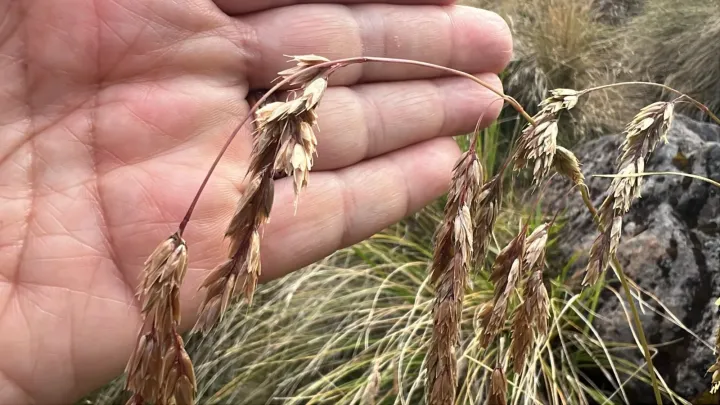
Description
Sowing dates
Sweet grass is primarily propagated through vegetative division using rhizome segments, as its seeds exhibit poor germination rates under field conditions. Planting is usually performed in early spring or late summer to allow for proper establishment before the winter dormant season.
The rhizomes should be planted at a depth of 5-10 centimeters, depending on soil texture. It is crucial to maintain adequate planting density to ensure the crop quickly forms a dense canopy, which is the most effective way to suppress weed competition in the early growth stages.
Rows should be spaced approximately 45-60 centimeters apart to accommodate mechanical maintenance and ensure proper airflow. Proper spacing prevents overcrowding, which is essential for maintaining the overall health and vigor of the perennial stand over several years.
If sowing seeds, they should be planted in late autumn or early spring after cold stratification. Because the seeds are tiny, they require shallow placement followed by light soil compaction to ensure good contact with the substrate and capillary moisture uptake.
Immediately after planting, the field must be irrigated thoroughly. New growth or the emergence of rhizome shoots typically occurs within two to three weeks, at which point regular inter-row cultivation should begin to facilitate aeration and nutrient availability.
Growing requirements
Sweet grass is a perennial rhizomatous grass belonging to the Poaceae family. It is a moisture-loving species that naturally thrives in damp meadows and cool, wet climates, making irrigation management a critical factor for successful commercial production.
The plant prefers light, well-drained soils rich in organic matter, such as sandy loams or loams. A near-neutral pH level is ideal for nutrient uptake, and the soil structure should be loose enough to facilitate the rapid spreading of underground rhizomes.
As a light-demanding plant, Sweet grass should be cultivated in open, sunny areas. Exposure to direct sunlight is essential for the accumulation of coumarin, the aromatic compound that defines the plant's characteristic scent of freshly mown hay and its economic value.
This crop is highly winter-hardy and easily tolerates the climatic fluctuations of temperate zones. Optimal growth temperatures range between 15 and 22 degrees Celsius, and the plant remains resilient even after mild spring frosts common in northern latitudes.
Mineral fertilization should be moderate, with a focus on nitrogen application during the early vegetative phase to promote foliage density. Waterlogging should be avoided, particularly in winter, as standing water can lead to rhizome rot and significant yield loss.
Yield
The productivity of Sweet grass plantations follows a typical curve, with yield increasing as the stand matures. During the first year, energy is directed toward rhizome expansion, meaning foliage production is significantly lower compared to subsequent years.
Peak productivity is generally achieved in the third and fourth years of cultivation. With optimal irrigation and fertilization, growers can harvest approximately 15-20 decitonnes of dried grass per hectare per single harvest, depending on the site-specific conditions.
Coumarin content, which represents the primary commercial interest in this crop, reaches its peak during the full flowering stage. Timing the harvest accurately during this window is critical to ensure high-quality, fragrant raw material that meets industry standards.
In regions with sufficient water and a long growing season, two cuts per year may be possible. This can significantly improve total yields, although it requires precise nutrient management to ensure the plants recover sufficiently between the first and second harvests.
The economic success of Sweet grass is highly dependent on drying techniques. By preserving the aromatic essential oils during the drying process, producers ensure the final product retains the quality required by the food, cosmetic, and perfumery industries.
Main diseases and pests
Sweet grass is generally resistant to most common grass pathogens, but high humidity and poor air circulation can lead to powdery mildew. Preventive measures include maintaining appropriate row spacing and ensuring the field is free from dense thickets of competing vegetation.
Various species of cereal flies and aphids can pose a threat to young shoots. Integrated pest management, focusing on early detection and the use of biological control agents, is recommended to protect the crop without compromising the quality of the aromatic foliage.
Wireworms are notable soil pests that can damage the root system. Proper site preparation, including thorough soil cultivation before planting and the use of healthy rhizome cuttings, is essential to establish a vigorous stand that can withstand light pest pressure.
Weed management is a constant requirement, as weeds compete aggressively for resources. Manual or mechanical weeding between rows is the preferred method, as chemical herbicides may have negative impacts on the plant's aromatic profile or consumer safety.
If fungal disease symptoms appear, affected patches should be removed and disposed of away from the main field. Providing adequate drainage and preventing overcrowding are the best proactive strategies to minimize the risks of disease spread in commercial plantations.
Harvesting
Harvesting Sweet grass requires precise timing to maximize the aromatic qualities of the crop. The optimal window is during full bloom, as this is when the concentration of essential oils and coumarin is highest within the leaves and stems.
The grass should be mowed during dry, sunny conditions, ideally in the mid-morning after the dew has evaporated. This ensures that the harvested material is not excessively wet, which helps prevent spoilage and preserves the integrity of the essential oils.
A cutting height of 5-7 centimeters is recommended to protect the tiller nodes, which are vital for plant regeneration. Cutting too low can cause undue stress to the rhizomes and delay recovery for the subsequent harvest or next season's growth.
Immediate transportation to the drying facility is necessary after harvesting. The grass should be dried in well-ventilated, shaded areas or in climate-controlled drying chambers at temperatures not exceeding 40 degrees Celsius to prevent the loss of volatile oils.
Once dried to the desired moisture level, the material should be packed in airtight containers to protect the aroma. Properly stored, dried Sweet grass maintains its commercial value for a long time, allowing for flexible market scheduling and consistent supply.