
Egyptian lovegrass
Eragrostis aegyptiaca
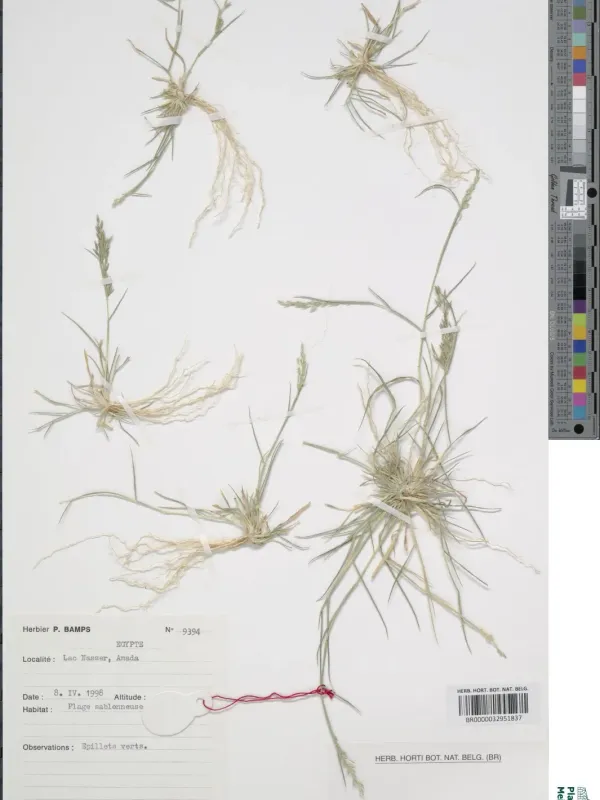
Description
Growing requirements
Egyptian lovegrass (Eragrostis aegyptiaca) is an annual grass species belonging to the Poaceae family. It is a resilient plant naturally adapted to hot and arid environments, commonly found in regions of Northern Africa and the Middle East.
This crop thrives in regions with prolonged sun exposure and high temperatures. It is particularly well-suited to sandy soils, where its ability to withstand periodic flooding or seasonal irrigation makes it a valuable species for specific agricultural zones.
The plant requires well-aerated soil to support its root system development. While it exhibits high tolerance for saline conditions, its growth is optimized when water drainage is managed correctly to prevent prolonged stagnation that could lead to root rot.
Climate adaptability is one of the key strengths of Eragrostis aegyptiaca. It manages water efficiency effectively, allowing it to maintain biomass production in environments where many other forage crops would fail due to heat stress.
Agricultural management begins with surface soil preparation to ensure a fine seedbed. Due to the small size of the seeds, planting depth must be carefully controlled to ensure successful germination and seedling establishment during the early phase of development.
Yield
The primary utility of Egyptian lovegrass is as a high-quality forage source for livestock. It is prized for its ability to produce multiple cuts per season, provided that moisture availability is maintained during the vegetative growth cycle.
Nutritionally, the grass provides essential fiber and protein content, particularly when harvested before the onset of senescence. Livestock, such as camels, sheep, and cattle, show high palatability for the fresh green biomass.
Yield productivity is maximized through timely harvesting, ideally during the booting stage before the plant enters the reproductive phase. This timing ensures the best balance between biomass volume and the nutritional density of the leaves and stems.
Beyond its forage value, the species acts as a potent tool for soil stabilization. Its root system forms a dense network that binds loose sandy particles, effectively reducing wind erosion in arid landscapes and restoring degraded fields.
Seed production is generally efficient, allowing for natural regeneration and reseeding of pastures. This characteristic minimizes the need for continuous reseeding by the farmer and ensures the long-term sustainability of the grass stand.
Main diseases and pests
Rust fungi are the primary pathological threats to the crop, especially in areas with high humidity or poor ventilation within the stand. Regular field scouting is necessary to identify early signs of fungal infection and apply appropriate measures.
Aphids and other sucking insects can pose a challenge, particularly during dry spells when the plant is under metabolic stress. These pests can reduce vigor and diminish the quality of the harvested biomass if not managed early.
Competition from invasive weeds is critical during the seedling establishment phase. Because early growth of the grass is relatively slow, mechanical weeding is recommended to reduce competition for nutrients and solar radiation.
Overgrazing poses a significant risk to the longevity of the pasture. Implementing a rotational grazing system ensures that plants have adequate recovery time, preventing the exhaustion of root reserves and protecting the soil surface.
Effective nutrient management, even in minimal amounts, helps the grass develop stronger defense mechanisms. Maintaining a balanced soil pH and preventing nitrogen deficiency are key components in the integrated pest and disease management strategy.