
Amphicarpum muhlenbergianum
Amphicarpum muhlenbergianum
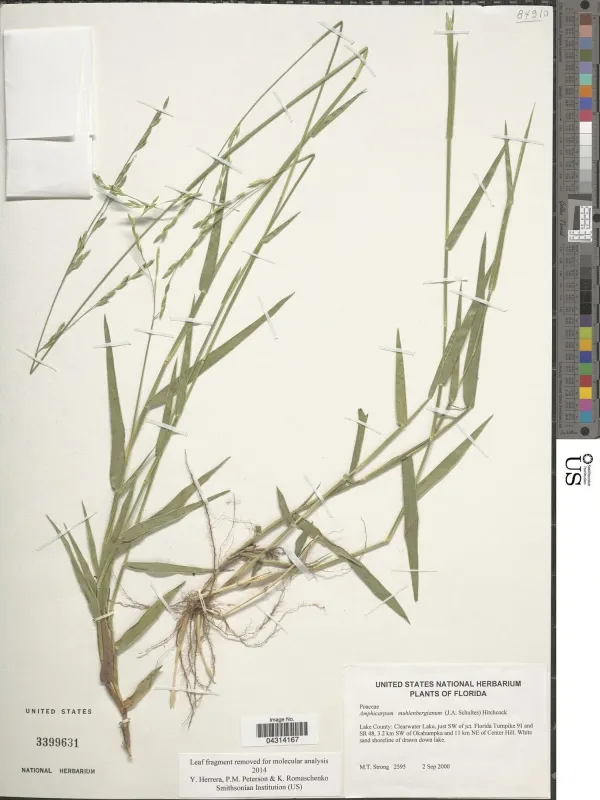
Description
Sowing dates
Amphicarpum muhlenbergianum, commonly known as blue maidencane, is an annual grass belonging to the Poaceae family. It is distinct for its unique biological strategy of producing both aerial and subterranean seeds.
Sowing should occur during the spring months when soil temperatures consistently reach levels suitable for germination, typically following the last frost of the season.
The seeds require a well-prepared seedbed with adequate moisture to ensure successful establishment, as the small seeds are sensitive to desiccation.
Planting density should be managed to allow for the expansion of the root system, which is crucial for the development of subterranean flowers produced in the latter part of the season.
Efficient germination is often triggered by natural disturbances in the soil, mimicking the conditions of the plant's native habitats in coastal regions.
Growing requirements
The species thrives in moist, sandy soils and is well-adapted to the acidic conditions often found in the pine flatwoods and open scrublands of its native range.
High levels of solar radiation are essential for the plant's photosynthesis and overall productivity, as it is highly sensitive to shading by taller vegetation.
While the plant is hardy in poor soils, irrigation management is key in agricultural settings to prevent extreme dry-out during the peak of the growing season.
Adequate soil aeration is necessary to support the underground development of cleistogamous flowers, which ensures the reproductive success of the plant.
Nutrient requirements are relatively low, making this grass a resilient choice for areas where intensive fertilization is not feasible or desired.
Main diseases and pests
Competition from invasive or more aggressive grass species remains the primary threat, as it can quickly overwhelm the relatively slow-growing seedlings of Amphicarpum.
Fungal diseases, including leaf blights and root rots, can occur if the growing environment lacks proper air circulation or experiences chronic water stagnation.
Herbivorous insects may cause significant damage to the foliage, which subsequently limits the plant's energy reserves needed for seed production.
Habitat loss due to urbanization and changes in regional fire management practices poses a significant risk to the long-term sustainability of local populations.
Standard monitoring for early signs of rust or mold is advised, especially in humid climates where the foliage remains damp for extended periods.