
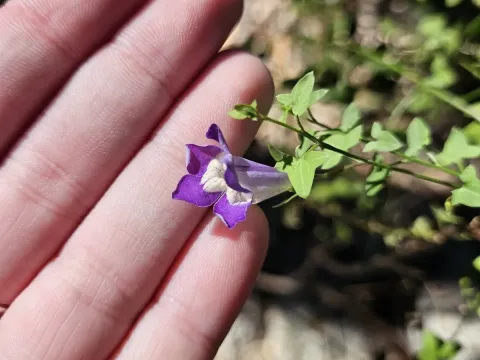
Maurandella
Maurandella
Sowing Maurandella seeds is best performed in a greenhouse environment from late February to early March. The optimal germination temperature ranges between 20 and 22 degrees Celsius with consistent moisture levels.
What the section contains

Maurandella
The transplant method is highly recommended, as the plant requires stable conditions during the early stages of its development. Seedlings should be transferred to open ground only after all frost risks have completely passed.
Seeds are photoblastic and require light to germinate; therefore, they should not be buried deep. A light dusting of vermiculite or fine sand is sufficient to provide the necessary conditions for successful sprouting.
Pricking out the seedlings should occur once the first two true leaves have developed. Providing individual containers for each plant ensures better root development and prepares the plant for its final outdoor location.
To improve germination uniformity, some growers utilize a short period of stratification. This pre-sowing treatment helps to awaken the seeds and ensures a more synchronized emergence of seedlings.
Maurandella belongs to the Plantaginaceae family and is recognized as a vigorous climbing plant. It thrives best in sunny areas that are protected from strong winds, which helps maintain the integrity of its climbing stems.
The soil must be fertile, rich in organic matter, and possess excellent drainage properties. Standing water around the root zone is detrimental, often causing rapid decay of the delicate root system.
Regular irrigation is necessary throughout the growing season, particularly during the vegetative growth phase. Installing robust vertical supports is essential, as the plant relies on these structures for climbing and structural stability.
The ideal temperature for vegetation is between 18 and 25 degrees Celsius. In regions experiencing extreme summer heat, light midday shade is advisable to prevent moisture stress and leaf desiccation.
Balanced fertilization with a focus on phosphorus and potassium encourages prolific blooming and maintains plant vigor. Incorporating compost or well-rotted manure during soil preparation provides a slow-release nutrient base.
Spider mites and aphids are the most common pests that affect young shoots. Systemic insecticides or specific acaricides should be employed at the first sign of infestation to manage these populations effectively.
Powdery mildew can develop if the environment has excessive humidity or insufficient air circulation. Promoting good airflow through proper spacing is a primary preventive measure against fungal outbreaks.
Root rot is often a consequence of poor drainage or overwatering. Maintaining a consistent watering schedule and using high-quality, porous soil mixtures significantly lowers the risk of these soil-borne diseases.
In cases of persistent fungal infections during rainy periods, the application of fungicides is necessary. Care should be taken to treat the plants according to the recommended dosages to avoid phytotoxicity.
Nematodes can pose a threat in greenhouses with reused or non-sterilized soil. Soil solarization or steam sterilization is a recommended practice to ensure the health of the plants throughout their cycle.